

منظمة العفو الدولية تحث العراق على وقف ترحيل لاجئين أحوازيين
تشرين2/نوفمبر 24, 2012حثت منظمة العفو الدولية السلطات العراقية على منع الإعادة القسرية لعدد من أفراد الأقلية العربية الأحوازية إلى إيران وسط مخاوف من تعرضهم لخطر التعذيب وغيره من انتهاكات حقوق الإنسان في إيران.
ويحُتجز حالياً في سجن البصرة لاجئان معترف بهما، وهما شاهد عبد الحسين عباس علامي وصالح جاسم الحامد، بينما نُقل شخص ثالث إلى حجز مسؤولين إيرانيين في العراق.
كما أن ما لا يقل عن ثلاثة عرب أحوازيين، وجميعهم من أفراد أسرة واحدة، عرضة لخطر جسيم، ويُعتقد أن السلطات العراقية اعتقلتهم بناء على طلب الحكومة الإيرانية لأن والدهم ناشط سياسي إيراني، يعيش حالياً في المنفى. وقد تم تسليم اثنين من أفراد هذه الأسرة، وكلاهما دون سن الثامنة عشرة، إلى مسؤولين إيرانيين في العراق، ولم يُعرف مصيرهم بعد ذلك.
وقال مالكوم سمارت، مدير برنامج الشرق الأوسط وشمال أفريقيا في منظمة العفو الدولية: "إن السلطات يجب ألا تسمح بإعادة أفراد الأقلية العربية الأحوزاية هؤلاء إلى إيران."
"وكان عرب أحوزايون آخرون، ممن اُعيدوا قسراً إلى إيران في الماضي، قد تعرضوا للتعذيب. وتخشى منظمة العفو الدولية أن يتعرض هؤلاء الأشخاص لخطر حقيقي لانتهاك حقوقهم الإنسانية في حالة إعادتهم، وسيشكل هذا الإجراء انتهاكاً لالتزامات العراق الدولية بموجب القانون الدولي.
ولا يُسمح للدول بإعادة الأشخاص إلى بلدان يمكن أن يتعرضوا فيها لخطر التعذيب أو غيره من الانتهاكات الخطيرة لحقوق الإنسان. وتظهر هذه الحالات في وقت يقال إن الحكومة العراقية تفاوض من أجل التوصل إلى اتفاقية تعاون مع إيران، تسمح للدولتين بتسليم أو تبادل السجناء المدانيين.
ومن بين أفراد هذه الأسرة الخمسة الذين يتعرضون للخطر: زيدان عباس وحيدر عباس وجبران جمعة عباس، وجميعهم محتجزون حالياً في سجن العمارة. كما اعتُقل معهم شقيقهم الأصغر وليد جمعة عباس وشقيقتهم الصغرى نسرين جمعة عباس، وكلاهما دون سن الثامنة عشرة، ولكن تم تسليمهم إلى مسؤولين إيرانيين في العراق.
وتُعتبر الأقلية العربية الأحوازية واحدة من الأقليات العديدة في إيران. ويعيش قسم كبير من الأقلية العربية في أقليم خوزستان الواقع جنوب غرب البلاد والمتاخم للحدود العراقية. ومعظم أفرادها من المسلمين الشيعة، ولكن بعضهم تحول إلى الطائفة السنية، مما زاد في شكوك الحكومة في الأحوازيين، الذين يشتكون من التهميش ويتعرضون للتمييز.
إن العراق دولة طرف في العهد الدولي الخاص بالحقوق المدنية والسياسية وفي اتفاقية مناهضة التعذيب، وهما معاهدتان تحظران الإعادة القسرية لأي شخص إلى بلد يمكن أن يتعرض فيه لخطر التعذيب أو غيره من ضروب إساءة المعاملة.
كما أن المبدأ الدولي المتعلق بعدم الإعادة القسرية يحظر الإعادة القسرية لأي شخص إلى بلد يمكن أن يتعرض فيه لخطر انتهاكات حقوق الإنسان، بما فيها اللتعذيب.
منظمة العفو الدولية

Iranian security forces arrested more than 65 Ahwazi Arab
تشرين2/نوفمبر 24, 2012(New York) – Iranian security forces arrested more than 65 Arab residents during security sweeps in Iran’s Arab-majority Khuzestan province since late 2011 according to local activists, Human Rights Watch said today. The Iranian government should immediately charge or release those arrested, Human Rights Watch said. Authorities should also investigate reports by local activists that two detainees have died in Intelligence Ministry detention facilities in the past week. Reports by local activists about security sweeps in the towns of Hamidiyeh, Shush, and Ahvaz indicate that authorities carried out at least some of the arrests in response to anti-government slogans and graffiti spray-painted on public property expressing sympathy for the Arab Spring and calling for a boycott of Iran’s parliamentary elections, scheduled for March 2, 2012. Human Rights Watch received information that Mohammad Kaabi, 34, and Nasser Alboshokeh Derafshan, 19, died in detention facilities run by local intelligence officials in Shush and Ahvaz respectively, apparently as a result of torture. The local activists say that most of those arrested are being held in incommunicado detention. “There has been a blackout inside Iran on this latest round of arrests targeting Arab protesters and activists,” said Joe Stork, deputy Middle East director at Human Rights Watch. “Authorities should immediately divulge the reasons for the arrests, give detainees access to family members and lawyers, bring all detainees promptly before a judge, and hold anyone responsible for torture to account.” Human Rights Watch expressed concern for those in custody. Based on past government actions some of those arrested could be at imminent risk of execution if they are convicted by revolutionary courts of national security crimes including terrorism or espionage, or face prosecution on such charges. Human Rights Watch is not aware of any charges that have been brought in these cases. According to several Iranian Arab rights groups, security forces have since November 2011 arrested at least 18 Arab men in Hamidiyeh, 25 kilometers west of Ahvaz, the provincial capital. The first arrest, on November 28, was of the prominent activist Hasan Manabi, an elementary school principal, and his brother Ghabel. A close friend of Hasan Manabi told Human Rights Watch that security and intelligence forces had arrested him numerous times since 2005. He said that Manabi, who had told the friend about torture and ill-treatment at the hands of intelligence officials following earlier arrests, had decided in late 2010 to seek asylum in Turkey. Manabi’s friend told Human Rights Watch that the Intelligence Ministry summoned and detained Manabi’s wife for several days to pressure him to return to Iran. Manabi returned in September 2011 and introduced himself to intelligence officials in Ahvaz, who interrogated him, then released him after several hours. But on November 28 intelligence agents raided Manabi’s home and arrested him and his brother Ghabel. The authorities have since accused Hasan Manabi of spying for the United States and the United Kingdom, in addition to having ties with Arab opposition groups operating in Khuzestan province. A local Khuzestan activist told Human Rights Watch that the latest round of arrests in Hamidiyeh began when security forces arrested nine Iranian Arabs on January 10 and four more on January 26 and 30. Most are between ages 20 and 28, and some had previously been detained for participating in demonstrations demanding more rights for Iran’s ethnic Arab minority. At least one has been released on bail, the local activist said, and several others have since been arrested. Authorities have also arrested at least 27 people in Shush, 115 kilometers northwest of Ahvaz, in recent weeks. A local activist there said that security forces, including plainclothes members of the Intelligence Ministry, initiated the arrests in response to anti-government slogans and graffiti spray-painted on public property expressing sympathy for the Arab Spring and calling for a boycott of Iran’s parliamentary elections, scheduled for March 2. The activist said that security forces set up checkpoints throughout Shush. After they arrested Jasim Kaabi, his daughter Khadijeh, and his son Mohammad in their home on January 21, he said “people became angry and poured into the streets.” In response, security forces arrested at least 24 men, most of them in their 20s, on January 25 and 26. The arrests took place in Ahmadabad, Khazireh, Davar, and several villages outside of Shush. “For about four days [from January 25] Shush was effectively under martial law, which has since been lifted,” the activist said. “But the city is still under a heavy security presence.” The local activist told Human Rights Watch that Mohammad Kaabi, who was arrested in Shush on January 21, died in custody at a local Intelligence Ministry detention facility. The local activist confirmed reports from other activists that on February 2 authorities from the Shush Intelligence Ministry office contacted Kaabi’s family and informed them that he had died. The official reportedly told the family that authorities had already buried Kaabi’s remains and there was no need for funeral services. They warned the family not to conduct a public mourning service for their son. Prior to news of Kaabi’s death, local activists told Human Rights Watch that 19-year-old Nasser Alboshokeh Derafshan had allegedly died after being tortured on January 30 in an Intelligence Ministry detention facility in Ahvaz. A source close to Derafshan’s family told Human Rights Watch that security forces arrested Derafshan on January 26 for unknown reasons. On January 30, agents from Ahvaz’s Intelligence Ministry called Derafshan’s father and told them to come pick up him up, the source said. When his father arrived at the detention facility, he caught a glimpse of a body inside the ambulance parked there and asked if it was his son, but the authorities denied it. He followed the ambulance to Golestan hospital and discovered that the body in the ambulance was his son’s. The source told Human Rights Watch that Derafshan’s family saw signs of torture on his body, including bruises on his face, neck, waist, and ribs. The authorities claim that Derafshan died of natural causes. The source told Human Rights Watch that authorities have so far refused to return Derafshan’s body to his family. Local activists also told Human Rights Watch that intelligence agents have arrested at least 11 Arab men in and around Ahvaz since February 3. Security forces arrested another 10 Arab men, all of whom are members of the Sunni sect, on January 17, activists said. One of them told Human Rights Watch that security forces, many of them plainclothes agents, are present throughout Ahvaz and the situation there is very tense. Human Rights Watch has received the names of many of those arrested or killed, but has not been able to verify the circumstances of each arrest due to severe government restrictions on independent monitoring and reporting in the province. Human Rights Watch previously called on Iranian authorities to allow independent international media and human rights organizations access to investigate allegations of serious rights violations in the province. “Security operations in Khuzestan province since protests there last April have resulted in the largest number of deaths and injuries since the crackdown that followed the disputed 2009 presidential election,” Stork said. “With the province under an information blackout and the history of secret convictions and executions, we have reason to be very worried about the people the authorities have been snatching up and carrying off there.” Background Khuzestan province, where much of Iran’s oil and gas reserves are located, has a large ethnic Arab population believed to number more than 2 million, possibly a majority of residents. Despite Khuzestan’s natural resource wealth, ethnic Arabs have long complained about the lack of socioeconomic development in the region. They also allege that the Iranian government has systematically discriminated against them, particularly in employment, housing, and civil and political rights.
The arrests in Hamidiyeh, Shush, and Ahvaz are the latest in an intense government security and media campaign over several years targeting Khuzestan Arab residents and activists. The government routinely alleges that Arab rights activists and protesters engage in terrorism and espionage, or are tied to armed Arab separatist groups. On December 13, 2011, Press TV, a government English-language station, aired a documentary featuring three Arab men who confessed before the cameras that they had carried out terrorist activities. The program alleged that the men – Hadi Rashedi, Hashem Shaabani, and Taha Heidarian – were part of a group called ‘Khalq-e Arab,’ supported by US and UK interests and foreign-based Iranian Arabs who fronted as human rights activists. A source who knows both Rashedi and Shaabani told Human Rights Watch that the two men are among more than 10 others from the town of Khalafabad, located about 120 kilometers southeast of Ahvaz, who have been arrested and detained by authorities since January 2011. He said he believes the men were forced to confess to these crimes after being subjected to physical and psychological torture. In April 2011, Human Rights Watch documented the use of live ammunition by security forces against protesters in cities throughout Khuzestan province, killing dozens and wounding many more. No Iranian official has been held to account for these killings. Authorities also arrested several hundred demonstrators and rights activists, some of whom are still in detention, and executed at least seven Arab men and a 16-year-old boy in Ahvaz’s Karun prison between May 4 and May 7, Iranian Arab rights groups reported. Local rights activists have told Human Rights Watch that at least some of those executed had been arrested only weeks before, during the April protests. Activists say that at least four others died in custody between March and May. The authorities should open independent and transparent investigations into all alleged killings, Human Rights Watch said. The April 2011 protests were held to mark the sixth anniversary of 2005 protests in Khuzestan, in which security forces opened fire to disperse demonstrators in Ahvaz and other cities and towns, killing at least 50 protesters and detaining hundreds. The 2005 crackdown led to a cycle of violence throughout Khuzestan province, including several bomb attacks in June and October 2005 and January 2006 that killed 12 people. In response, the government imprisoned numerous activists it claimed were Arab separatists responsible for terrorist attacks against civilians and sentenced more than a dozen people to death on terrorism-related charges. Since 2006, authorities have executed at least 19 Iranians of Arab origin. Names of People Reported Arrested in Khuzestan Province Since November 2011 (provided by local activists)* Shush: Qasem Badavi, Jaajaa Chenani, Aadel Dabbat, Ahmad Dabbat, Ashur Dabbat, Faisal Dabbat, Kazem Dabbat, Ebrahim Heidari, Hamid Kaabi, Jaafar Kaabi, Jasem Kaabi, Karim Kaabi, Khadijeh Kaabi (female), Mohammad Kaabi (died in detention), Sajjad Kaabi, Ali Kenani, Abbas Khasraji, Mehdi Khasraji, Moslem Mazraavi, Morteza Mousavi, Hasan Navaseri, Mehdi Navaseri, Salar Obeidavi, Amir Sorkhi, Adnan Zoqeibi, Ahmad Zoqeibi, Osman Zoqeibi Hamidiyeh: Hasan Abiat, Jalil Abiat, Jamal Abiat, Aadel Cheldavi, Adnan Cheldavi, Karim Doheimi, Ali Heidari, Mohammad Adnan Helfi, Ghabel Manabi (arrested November 2011), Hadi Manabi, Hasan Manabi (arrested November 2011), Seyed Faraj Mousavi (released on bail), Heidar Obeidavi, Khaled Obeidavi, Ayoub Saedi, Emad Saedi, Abbas Samer, Eidan Shakhi Ahvaz (and vicinity): Ahmad Afravi (Sunni), Nasser Alboshokeh Derafshan (died in detention), Majid Bavi (Sunni), Abdolvahid Beit Sayyah (Sunni), Valid Hamadi, Qazi Handali Farhani (Sunni), Jamal Hazbavi (Sunni), Tofiq Heidari, Hamid Khanfari Batrani (Sunni), Hossein Khazraji (Sunni), Said Khazraji (Sunni), Jasem Marvani, Taher Moaviyeh, Mohammad Naami, Seyed Ahmad Nazari (Sunni), Aadel Saedi, Hossein Savari, Ali Sayyahi, Ali Sharifi, Sadoun Silavi, Khalaf Zobeidi (Sunni) *This list is not exhaustive and Human Rights Watch could not independently verify whether the individuals listed remain in
Human Rights Watch
07.02.2012

Tote bei Demonstration
تشرين2/نوفمبر 24, 2012Ahwazischer Verein: 470 Personen festgenommen
Wien/Ahwaz - Bei Demonstrationen für die Selbstbestimmung im westiranischen Ahwaz (Ahvas/Ahvaz) in der Provinz Khouzistan (Chuzestan) sollen am vergangenen Freitag mehrere Menschen getötet worden sein. Das teilte der "Ahwazische Verein zur Verteidigung der Menschenrechte", mit Sitz in Wien, am Montag in einer Aussendung mit. An zwei Demonstrationstagen sollen demnach 19 Menschen von iranischen Streitkräften getötet und Dutzende verletzt worden sein. 470 Personen, darunter 50 mitunter schwangere Frauen, seien festgenommen worden.
Zu der Demonstration hatten laut dem Verein unter dem Motto "Tag des Zorns" politische Aktivisten und Organisationen aufgerufen, die die "Okkupation" der Region Ahwaz sowie Übergriffe der iranischen Behörden auf die Menschen in dem Gebiet verurteilten. Zudem hätten sie die Internationale Gemeinschaft zum Eingreifen aufgefordert. Ahwaz ist die Hauptstadt der öl- und erdgasreichen historischen Landschaft Chusistan - auch Gebiet arabischer Separatisten im Südwest-Iran. In dem nahe der irakischen Grenze liegenden Gebiet sind 50 Prozent der Einwohner Araber. Die iranische Bevölkerung insgesamt zählt nur rund drei Prozent Araber. (APA)
Der Standard Wien/Österreich
18.04.2011

Amnesty International: Iran has arrested at least 90 Ahwazi Arabs between 10 January and mid-April 2012.
تشرين2/نوفمبر 24, 2012Amnesty International said on Friday 18 May 2012 that Iran has arrested at least 90 Ahwazi rights activists and protesters in Arabistan AlAhwaz between January and April.
“Between 10 January 2012 and the beginning of February, in the lead-up to parliamentary elections held on 2 March, between 50 and 65 people were reportedly arrested in at least three separate locations in the province; at least two deaths in custody were also reported. Some Ahwazi Arabs, mostly in Shoush [Susa], north-central Khuzestan [Arabistan], called for a boycott of the elections and arrests in Shoush [Susa], reportedly followed the appearance of anti-election slogans painted on walls. Others may have been pre-emptive arrests aimed at preventing any gathering of Ahwazi Arabs either on the anniversary of country-wide demonstrations held on 14 February 2011 in support of the people of Tunisia and Egypt which were violently repressed, or on the 15 April anniversary of the “Day of Rage”. In the immediate lead-up to the 15 April anniversary, from late March until mid-April 2012, at least 25 Ahwazi Arabs were reportedly arrested following protests in cities across the province” Amnesty International said in an "URGENT ARGENT" it has launched on 18 May.
Saturday, 19 May 2012

We Demand Freedom For Six Awazi Activists In Iran, Facing Unfair Trial, At Risk Of Torture Or Execution
تشرين2/نوفمبر 24, 2012We, the undersigned, demand the the international community act now and bring all possible pressure to bear upon the Islamic Republic of Iran to unconditionally release blogger Mohammad Ali Amouri; teacher Rahman Asakereh, teacher Hashem Sha’bani Amouri, teacher Hadi Rashidi, Sayed Jaber Alboshoka and his younger brother Sayed Mokhtar Alboshoka. These six are activists from Iran's Awazi Arab minority, who are in grave risk of torture and possibly execution.
They are prisoners of conscience who are going on trial under illegal charges which steam solely from their own peaceful activism and protected under Article 18, section 1, and Article 19, sections 1 and 2 of the International Covenant on Civil and Political Rights, as well as Article 24 of Iran's Constitution.
Clearly, the Islamic Republic's henchmen are also motivated by the vindictive desire to punish Awazi Arabs for past activism, as witnessed by the fact that these men were arrested at their homes in February and March 2011 in advance of the sixth anniversary of widespread protests by Ahwazi Arabs in April 2005.
It is the Islamic Republic regime, not these six activists, who are guilty of committing serious crimes in this case. It is incumbent upon the international community to act accordingly!
Monday, 21 May 2012

British Foreign Secretary William Hague Condemns Violence Against Ahwazi Arabs Protesters
تشرين2/نوفمبر 24, 2012
Below are excerpts of his statement to The Shadow Prime Minister, Harriet Harman MP
"I am deeply concerned by the continuing reports of violence against protesters in the towns of Hamidiya, Shush and Ahwaz including disturbing reports of the torture and the death of several young men in custody. This is grossly hypocritical when Iran claims to supports protests elsewhere in the region. We are working to corroborate reports coming from Khuzestan [Arabistan] of the deaths of prisoners in custody, and of ongoing disproportionate response to peaceful protests in Khuzestan [Arabistan] province. If true, Theses are extremely concerning and I condemn them in the strongest possible terms.
...“The British Government strongly supported the establishment of UN Special Rapporteur Dr Shaheed, and also the resolution to renew his mandate at the Human Rights Council in March. We are disappointed Iran has not seized this opportunity to engage with the UN and has publicly stated it will prevent Dr Shaheed from visiting Iran.”
“Despite the violent attacks on the British Embassy in Tehran on 29 November, British government the British Government will continue to work with EU partners and in the UN on human rights issues such as those the repression of the rights of Iranian [Ahwazi] Arabs... The British government will continue to urge Iran respect the full and equal rights of its people, regardless of their faith of ethnicity, in line with its international obligations”, British Foreign Secretary said.
Friday, 25 May 2012

British Member of the European Parliament (MEP) Urges European Commission to Consider Whether There Is a Need for a UN Fact-finding Mission to Al Ahwaz
تشرين2/نوفمبر 24, 2012British MEP, Marina Yannakoudakis, has tabled a parliamentary question to The EU´s High Representative for Foreign Affairs and Security Policy, and Vice President of the European Commission Catherine Ashton regarding alleged human rights abuses by the Iranian government against its Arab citizens in Al-Ahwaz to raise further awareness on this issue and to gain more information.
She called on European Commission to consider whether political pressure can be exerted by the European External Action Service (EEAS) on Iran to bring an immediate end to ethnic, religious, economic and cultural human rights violations faced by its own Arab citizens in Al-Ahwaz.
Ms. Yannakoudakis requested the EEAS to consider alleged abuses, which include unfair trials, torture, forced confessions and executions, have been well documented by Amnesty International and Human Rights Watch and whether there is a need for the EEAS to contact the UN High Commissioner for Human Rights, Navi Pillay, to request a UN fact-finding mission to Al-Ahwaz/Khuzestan to investigate these disturbing claims in their reply.
Saturday, 26 May 2012

15 Killed in alahwaz area inside Iran
تشرين2/نوفمبر 22, 2012Said human rights activist, calling itself the code name was "the daughter of the marsh": "The region is undergoing a difficult, although a tight blockade imposed by the Iranian security forces backed by militias called (Alssowsk) dressed in civilian clothes and they broke up demonstrations by force, although the forces of the Revolutionary Guards and Basij a major role the imposition of the embargo. "
The "Daughter of the marsh" that the death toll to 15 people from alahwaz, and dozens wounded, according to latest statistics from the Media Office for the youth of the fifteenth of April, and the number of detainees is a known fact that the Iranian authorities arrested randomly and heavy, and are talking about thousands.
And human rights activist appealed to the Arab community because of their rescue Ahwazi subjected to repression and harassment by the security authorities of Iran.
Denied the "daughter of Ahvaz," that there would be any media coverage within the territory of the marsh, said that the youth revolution of the fifteenth of April rely on themselves through the deployment Footage mobile phones and small cameras on the Internet.
She stressed that the bulk of Ahwazi went out on the day of wrath Ahwazi in cities and villages, and that "the humanitarian situation is very bad, and that the food and water is very small, and closed all the shops which makes life difficult."
http://ireport.cnn.com/docs/DOC-592192

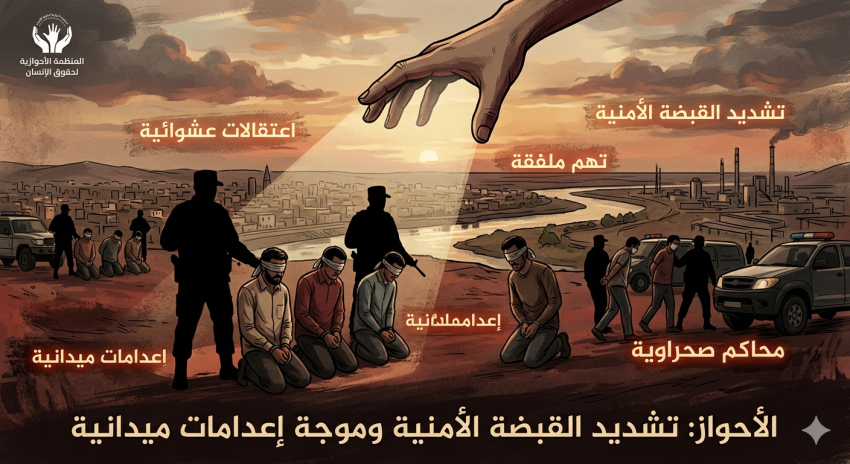
Iran's execution campaign against Ahwazi Arabs
تشرين2/نوفمبر 22, 2012International condemnation of Iran’s treatment of its persecuted and impoverished Ahwazi Arab minority is growing as the government continues its campaign of execution against Ahwazi dissidents. The European Parliament, Nobel Prize Winner Shirin Ebadi and leading international human rights organisations have voiced increasing alarm at the number of death sentences imposed and carried out by the government in recent weeks. Last month four Ahwazi political prisoners were executed for “enmity with God” and “sowing corruption on the Earth”. This followed trials widely condemned as flawed. Five more have been sentenced to death in recent days. Earlier this year, the Ministry of Intelligence tortured two young Ahwazis to death just days after they were arrested. Their crime was daubing graffiti calling for an election boycott in Arab neighbourhoods. Shortly before their execution in June, three brothers - Taha Heidarian, Abbas Heidarian and Abdul-Rahman Heidarian and the friend Ali Sharifi secretly filmed an appeal to the UN Special Rapporteur on Iran Ahmed Shaheed calling for his intervention to halt the campaign. They vehemently denied the murder charges against them and detailed three months of torture, sometimes in the presence of the public prosecutor, in which they finally agreed to sign false confessions. They also voiced their opposition to terrorism and violence, saying their only interest was to protest against the persecution of their community.
Five others condemned to death following trials condemned as deeply unfair are Hadi Rashedi, Hashem Shabani, and Mohammad-Ali Amouri and two brothers Seyed Mokhtar Alboshokeh and Seyed Jaber Alboshokeh.
According to Human Rights Watch, the five were arrested by security forces in February 2011. They have all been found guilty of being linked to a terrorist organisation and involvement in shootings that authorities say occurred in and around the town of Khalafabad in Khuzestan province in 2010. However, UNHCR mandated refugee Muhammad Ali Amoori had been in prison in Iraq from 2007 until he was illegally repatriated in early 2011. He had fled Iran after the reformist group to which he belonged, the Lejnat al-Wefaq, had been banned after it won control of Ahwaz City Council and secured a seat in parliament. Human Rights Watch’s Middle East Directed Sarah Leah Whitson stated that there was no evidence presented against the men and no transparency in the conviction and sentencing. Human rights groups such as Justice for Iran are now calling for Iranian officials involved in the persecution of the country's Arab minority to be subject to international sanctions. Iran fears the upsurge in Ahwazi unrest in its oil-rich and strategically important Khuzestan province, located in the southwest bordering Iraq. Attacks on pipelines by Ahwazi militant groups have shaken a regime that is desperate to sustain oil exports amid increasing isolation. It has claimed, without proof, that Ahwazis are supported by an array of Arab and Western governments as well as Israel, Al-Qaeda and international oil producers. The root cause of the unrest, according to human rights groups, is long-standing political marginalisation, social discrimination and high levels of poverty. With poverty rates exceeding 50% and deaths through child malnutrition accounting for a fifth of all deaths over the past two years, the Ahwazi Arab population’s impoverishment is in stark contrast to the wealth of Iran’s Arab neighbours. Yet traditional Ahwazi Arab lands account for 90% of Iran’s oil revenues and 10% of OPEC output – more than Kuwait and the UAE combined. The fall of the Assad regime would further encourage Ahwazis to confront the Iranian government over long-standing grievances. In this context, the execution campaign is a desperate attempt to silence Ahwazi dissent.

Karoon Prison, Ahwaz: A human rights crisis
تشرين2/نوفمبر 22, 2012Prison authorities have banned access to books, booklets, pamphlets and anything else in the written word in Karoon Prison in Ahwaz. The confiscation of all literature in a prison that lacks basic amenities, such as toilets and adequate food provision, is likely to fuel antagonism between guards and inmates.
According to the Human Rights Activists News Agency, the security environment inside the prison has intensified following the execution of four Ahwazi Arab political prisoners. The four had made a secret video appealing to the UN Special Rapporteur on Iran Ahmed Shaheed calling for his intervention to stop Iran's execution binge against Ahwazi dissidents. Karoon Prison witnessed rioting by inmates following the executions.
According to the Meli Mazahdi website, in recent days security units attached to the Khuzestan Prisons Organisation have carried out prison searches without prior notice given to the prison authorities. The political section of the prison is under the control of special forces in order to terrorise prisoners.
Karoon prison has a security and political section that holds the largest number of Ahwazi Arab political prisoners in Iran. The section is cramped with only five toilets shared by more than 300 prisoners of whom around 100 are political prisoners and the rest are dangerous gangsters and drug addicts. The section is over-capacity and many inmates are forced to live and sleep in the toilet areas and corridors. The prison is under the control of the IRGC with prison officials selected from the IRGC. There is a close relationship between Karoon Prison and secret detention facilities run by the Ministry of Intelligence.
There is a lack of access to clean water and prisoners are forced to buy drinking water from guards. Inmates suffer malnutrition caused by inadequate calorific value and no vegetables and fruit as well as food-borne diseases caused by unsanitary preparation. Medical care is insufficient and there is a shortage of medicine. There are routine incidents of physical abuse and theft by guards during inspections.
Zia Nabavi, a student activist arrested for his involvement in the Council to Defend the Right to Education and exiled from Tehran to spend 15 years in ‘internal exile’ in Karoon Prison, said in a recent interview: “In ward 6 of Karoun prison in Ahvaz, at times, I really felt like I was living on the brink of what distinguishes a human’s life from an animal’s. Under those conditions, nothing was more dear to me than [the existence of] a binding law that would guarantee my safety and provide me with personal boundaries for the purpose of thinking and reflecting. If anyone thinks that morals and ethics or customs could play such a role [in place of a binding law], they are entirely mistaken. I, with all my pretension of respect for democracy and intellect, was not prepared to give my friends, who were dealing with the same problems as me, the opportunity to sleep on the bed [in the prison cell] or take a shower- nor was I even ready to offer them such chances out of politeness.”
Solitary confinement is a regular practice to punish prisoners and extract confessions. Iran Briefing states: "There are specials cells at the Karoon prison where political prisoners are psychologically and physically tortured; they are hung upside down and beaten with batons while blindfolded and restrained."
Visitors also complain of abusive treatment by prison officials, including undignified bodily searches. Some family members are refused access to prisoners if they wear traditional Arabic dress. Depriving prisoners of family visits and telephone calls is used as a form of punishment.