


56. Poor infrastructure in Alahwaz continues to contribute to the limited access to drinking water in many communities in the predominately Arab province
تشرين1/أكتوير 23, 2013United Nations
A
/68/503
General Assembly
Distr.: General
4 October 2013
Original: English
13-50031 (E) 141013
*1350031*
Sixty-eighth session
Agenda item 69 (c)
Promotion and protection of human rights: human rights situations and reports of special rapporteurs
and representatives
Situation of human rights in the Islamic Republic of Iran
*
Note by the Secretary-General
The Secretary-General has the honour to transmit to the General Assembly the report of the Special Rapporteur on the situation of human rights in the Islamic Republic of Iran, Ahmed Shaheed, submitted in accordance with Human Rights
Council resolution
22/23
, in which the Council extended the mandate of the Special Rapporteur for the second time.
The present report does not detail all of the violations of human rights in the country reported to the Special Rapporteur, but does provide an overview of the prevailing human rights situation, with a focus on systemic issues that pose obstacles to the ability of the Islamic Republic of Iran to comply with its international human rights obligations.
_
B. Ahwazi Arabs
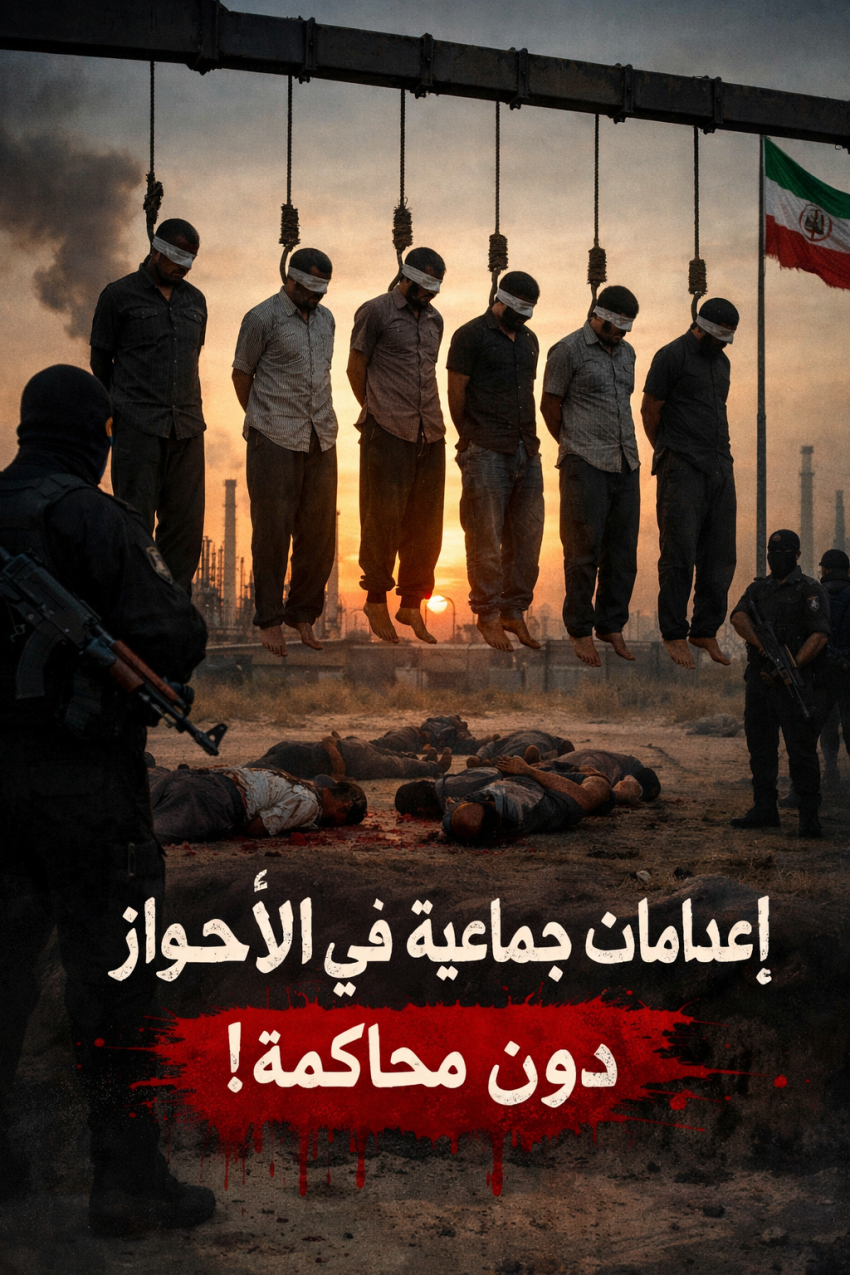
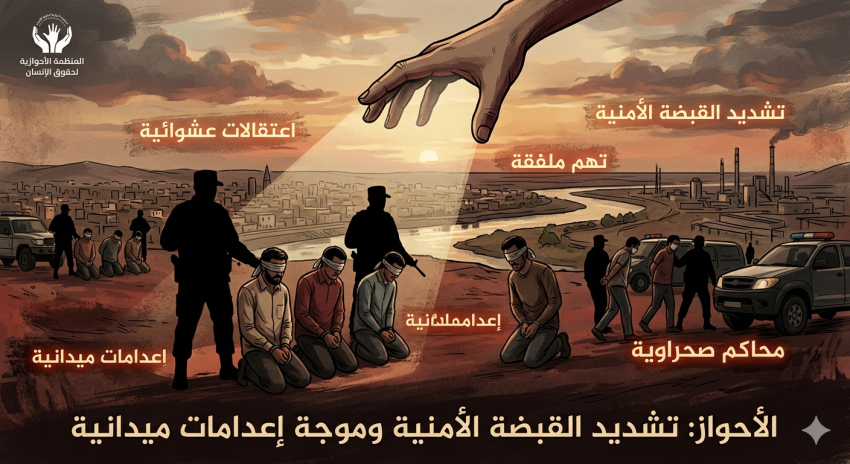
55. Despite international appeals, five cultural rights activists of the Ahwazi Arab community continue to face imminent execution after having been convicted of “gathering and colluding against State security”, “spreading propaganda against the system”, “enmity against God”, and “corruption on earth”. It has been widely reported that those individuals were tortured during interrogation and forced to issue confessions that were later used against them in connection with protests that took place in 2011 and 2012 across Khuzestan Province. The individuals reportedly engaged in a dry hunger strike in protest oftheir torture and mistreatment while in
prison. Four Iranian bankers and businessmen, including Mahafrid Amirkhosravi,reportedly remain on death row for “disturbing the country’s economic system through collusion and corruption in the banking network”.
56. Poor infrastructure in continues to contribute to the limited access to drinking water in many communities in the predominately Arab province. The Ahwaz water refineries, reportedly constructed to support a population of 4,000, currently serve 1.5 million people. It is reported that water in the area is sopoor that it is not usable for cleaning clothing; that Iranian officials representing the area have raised concern and called for action; and that residents have unknowingly ingested polluted water when the Ahwaz water and waste company failed to notify residents of its refinery closures or unsuccessful attempts to adequately filter water because of heavy rainfall. Persons interviewed for the present report maintained that the water in Ahwaz has a repugnant odour and is undrinkable, threatening health and for the past decade forcing residents with financial means to purchase drinkable water and those without means to risk drinking unsanitary water
http://shaheedoniran.org/wp-content/uploads/2013/10/N1350031.pdf
_________________

Situation of human rights in the Islamic Republic of Iran
تشرين1/أكتوير 23, 2013United Nations
A
/68/503
General Assembly
Distr.: General
4 October 2013
Original: English
13-50031 (E) 141013
*1350031*
Sixty-eighth session
Agenda item 69 (c)
Promotion and protection of human rights: human rights situations and reports of special rapporteurs
and representatives
Situation of human rights in the Islamic Republic of Iran
*
Note by the Secretary-General
The Secretary-General has the honour to transmit to the General Assembly the report of the Special Rapporteur on the situation of human rights in the Islamic Republic of Iran, Ahmed Shaheed, submitted in accordance with Human Rights
Council resolution
22/23
, in which the Council extended the mandate of the Special Rapporteur for the second time.
The present report does not detail all of the violations of human rights in the country reported to the Special Rapporteur, but does provide an overview of the prevailing human rights situation, with a focus on systemic issues that pose obstacles to the ability of the Islamic Republic of Iran to comply with its international human rights obligations.
__________________
* The present report was submitted after the dead
line as a result of consultations with the Member
State.
A/68/503
13-50031
2/20
Report of the Special Rapporteur on the situation of human rights in the Islamic Republic of Iran
I. Introduction
1. The human rights situation in the Islamic Republic of Iran continues to warrant serious concern, with no sign of improvement in the areas previously raised by the General Assembly or the various human rights monitoring mechanisms. This includes progress in advancing commitments accepted by the Government during its
2010 universal periodic review. Tensions between various aspects of the country’s laws and its human rights obligations, along with the capricious application of those laws, remain causes of the lack of progress. As a result, gender discrimination, as well as systemic and systematic violations of civil, political, economic, social and cultural rights, continue to characterize the human rights situation in the country.
2. Perfunctory cooperation with the United Nations human rights mechanisms engenders further concern about the compliance of the Islamic Republic of Iran with its human rights obligations, and insufficient transparency continues to impede attempts to further ascertain the extent and nature of the country’s human rights situation. In its comments on the present report, the Government asserted its cooperation with the United Nations human rights mechanisms, highlighting the fact that it is a signatory of a number of international human rights treaties, has participated in its 2010 universal periodic review, during which it accepted 123 recommendations, has engaged in two treaty body reviews in the past two years and has provided responses to communications transmitted by the special procedures mechanisms.
3. The Government responded to 8 of the 28 joint communications transmitted by the special procedures mechanisms in 2012 and remains reticent on a number of their requests to visit the country. The Government has failed to respond to 12 communications issued by the Special Rapporteur since January 2013, including
3 allegation letters, 9 urgent appeals and a number of questionnaires transmitted to several ministries to further ascertain the impact of sanctions.
4. The Special Rapporteur reviewed information from 137 interviews that either corroborate or refute reports submitted by human rights organizations and defenders. The Government provided a 52-page commentary on the present report, which is referred to throughout this document.
The Special Rapporteur is pleased to have been granted a meeting with Mohsen Naziri Asl, Permanent Representative of the Islamic Republic of Iran to the United Nations Office at Geneva, on 26 September, and hopes that there will be more opportunities for dialogue with the Irani
an authorities. He renews his call for the Islamic Republic of Iran to engage with the United Nations human rights mechanisms in a meaningful and constructive manner, including by admitting him to the country. The Special Rapporteur also welcomes the release of a number of prisoners of conscience, including Nasrin Sotoudeh, a prominent human rights activist and lawyer, on 18 September, and calls upon the Government to build on this positive development by releasing hundreds of other prisoners detained solely for exercising their freedom of expression, association and assembly.
A/68/503
3/20
13-50031
II. Freedom of expression, access to information and association
6. A number of Iranian laws and policies, including the 1986 Press Law, the 2009 Computer Crimes Law and the 2010 Cybercrime Law, continue to flagrantly violate the right to freedom of expression and acce
ss to information under international law. Also of concern are reports that the Government considers 600 Iranian journalists to be part of an anti-State network, that it has stated that journalists are arrested to prevent them from engaging in “seditious activities” and that the Government broadened the scope of sanctioned expression in February 2013 to include online content that either encouraged boycotts of the 2013 presidential election or mocked its candidates. In its comments, the Government asserts that freedoms are determined on the basis of their conformity with Islamic standards and that elected officials establish laws through a democratic process and therefore they do not violate freedom of expression or access to information. The Special Rapporteur
continues to underscore that restrictionson the freedom of expression must be unambiguous, narrow and coupled with adequate safeguards against abuse.
7. Some 67 Internet cafes were reportedly closed in July 2013, authorities have reportedly announced that up to 5 million websites are blocked, and in April 2013 officials estimated that some 1,500 “anti-religious websites”, such as those containing pro-Wahhabi or Baha’i content, are blocked per month, as well as those dedicated to
news, music and women’s rights, web pages maintained by ethnic minorities and
social media sites.
8. At least 40 journalists, as well as 29 bloggers and online activists, are reportedly serving sentences in the Islamic Republic of Iran, and at least 23 journalists have reportedly been arrested since January 2013 (see figure I). This includes the arrest of 15 journalists between 25 and 27 January, the largest mass arrest of journalists in the country since 2009, as well as the arrest of 8 journalists on 6 and 7 March. All 40 journalists currently serving prison sentences were convicted for either national security crimes or crimes of a political nature, with
18 being convicted for “spreading propaganda against the State”.
Figure I
Journalists imprisoned in the Islamic Republic of Iran, 2004-2013
9. Seven individuals were reportedly sentenced for crimes associated with their roles as lawyers and administrators of Majzooban Noor, a community news website that covered human rights abuses against members of the Dervish community. Their prison sentences range from 7.5 to 10.5 years for crimes including “organizing an
A/68/503
13-50031
4/20
illegal group with the intent to disturb national security” and “propaganda against the regime”. Sources reported that as at 18 July, the defendants had refused to submit an appeal as a form of protest against unfair trial standards, including inadequate access to legal counsel. It was also reported that a conservative blogger,
Mojtaba Daneshtalab, who was detained on 9 April 2013, received a six-month prison sentence and was fined on charges of insulting the Supreme Leader and other Iranian authorities as a result of critical comments he allegedly posted on his blog.
10. Journalists Khosro and Massoud Kordpour were arrested in March 2013 and charged with moharebeh
(enmity against God), mofsid-fil-arz(corruption on earth), propaganda against the system, insulting the Supreme Leader and propagating falsehoods. Massoud Kordpour asserted his innocence and maintained that providing
analysis or stating opinions about the problems in Kurdistan was not a criminal act during the first session of his trial, in August 2013. In its commentary, the Government accused the journalists of cooperating with terrorist groups but stopped short of identifying charges related to terrorism.
11. Furthermore, the director of Radio Farda, Ahmad Mostofi, reported that in May 2013 at least nine incidents occurred inwhich family members of Radio Farda staff were interrogated and pressured to persuade their relatives to cease doing reporting work and, in some cases, to spy on their relatives. The Special Rapporteur
also received reports of the continued harassment and pressuring of family members of journalists, particularly those who work for or with foreign outlets, particularly BBC Persian. 12. The Special Rapporteur examined a study that investigated access to Persian-language articles on the popular open-source encyclopedia, Wikipedia. The study revealed that 964 Persian-language articles on a wide range of topics are effectively
blocked in the Islamic Republic of Iran (see figure II). These and other websites are apparently blocked through the use of either keyword filters that work to impede access based on text in the web address (URL) or by specifically blocking a site.
Keyword filtering is also seemingly responsible for restricted access to numerous Wikipedia articles that discuss sexual health, anatomy or bodily functions in a scientific or public health manner, including articles on safe sex and reproductive organs.
Figure II
Wikipedia sites blocked in the Islamic Republic of Iran, by topic
A/68/503
5/20
13-50031
13. Artificial limits placed on Internetconnection speed, often called throttling, have also been reported (see figure III). The average user speed in the Islamic Republic of Iran reportedly fell by more than 70 per cent in the days following the announcement of presidential candidates vetted by the Guardian Council through election day. On 25 June the Minister for Communications and Information Technology reported that the reduction of Internet speed during the 2013 election period was the result of security measurestaken to preserve calm in the country.
Figure III
Average connection speed, in megabits per second, January-June 2013
14. The Special Rapporteur remains concerned about ongoing violations of the right to freedom of association through the use of overly broad public order and national security laws, resulting in ongoing bans on certain political parties as well as the persecution of human rights defenders conducting peaceful activities to advancehuman rights or provide humanitarianassistance to Iranian communities. It has been estimated that at least 500 human rights defenders are being detained in the Islamic Republic of Iran. This includes the ongoing detention of more than a dozen labour rights activists and approximately 15 student rights activists, who are all
serving prison sentences of five years or more for the peaceful advocacy of workers’ and students’ rights.
15. The Special Rapporteur has also received reports about the ongoing detention of at least 30 aid workers allegedly arrestedin connection with their work to provide shelter and supplies to victims of the August 2012 earthquake in east Azerbaijan.
Those individuals were reportedly charged with such crimes as participation in assembly and collusion to commit a crime against national security and participation in posing a public health threat, and at least three of the aid workers were reportedly sentenced to over two years in prison.
1/1/2013
1/2/2013
1/3/2013
1/4/2013
1/5/2013
1/6/2013
Election Day
A/68/503
13-50031
6/20
III. Administration of justice
A. Legal developments
16. The Special Rapporteur welcomes the Government’s decision to suspend deliberation on the Bill of Formal Attorney ship raised in his previous reports (see A/67/369), and encourages the Government to consider its withdrawal. The bill would increase government supervision over the Iranian Bar Association, severely undermining its independence and possibly undermining the likelihood of fair trials.
17. The Special Rapporteur is also deeply disturbed by amendments to article 27 of the Custodianship Bill currently under review in the Parliament (Majles) that would allow a custodian to marry his adopted child if it is deemed to be “in the best interest of the child”. This amendment would seemingly serve to undermine the
welfare of the girl child who is forced tomarry her legal guardian. In a June 2013 communication with the Special Rapporteur, the Organization for Defending Victims of Violence, which describes itself as a non-governmental, non-profit, non-political organization in the Islamic Republic of Iran, reported that under
Iranian law, no legal relations, as in the case of a natural child, is established between the adopter and the adoptee, so therefore, under religious jurisprudence and legally, there are no obstacles in the way of marriage. In addition, the Special Rapporteur notes that another amendment to the bill, which would allow for inter-faith adoption to take place in the event that applicants from a non-Muslim child’s own religion were unavailable, was struck, potentially undermining articles 2 and 3 of the Convention on the Rights of the Child, in which discrimination against children is prohibited and actions taken by social welfare institutions are required to
be in the best interests of the child. 18. Furthermore, despite the recent endeavour to amend the country’s Islamic
Penal Code, concerns previously raised by international bodies persist.
1
For example, the Penal Code continues to consider some “crimes” not meeting the “most serious” standards under international law to be capital offences. These include adultery, drug trafficking, homosexual acts, recidivist alcohol consumption and insulting Islamic prophets. The new code also continues to use overly broad and vaguely worded national security laws under which authorities can prosecute, convict and sentence political dissidents for protected activities. Moreover, the code appears to expand the categories and definitions ofnational security crimes to include “armed rebellion”, “sowing corruption” and “damaging the economy of the country”. Lastly, the Penal Code retains stoning as a method of execution for individuals convicted of adultery, retains amputation and crucifixion for other crimes, such as “enmity against God”, and continues to allow for the execution of juveniles.
B. Prison conditions
19. The Special Rapporteur is concerned about reports related to the medical conditions of six prisoners who are allegedly being denied access to necessary external medical care, in violation of international law and standards requiring adequate nutrition and medical attention, prohibiting torture and cruel, inhuman or
__________________
1
The Islamic Penal Code was reportedly a
pproved by the Guardian Council on 27 April 2013.
A/68/503
7/20
13-50031
Jan-Jun
2013
degrading treatment or punishment and requiring that prisoners be treated with humanity and with respect for the inherent dignity of the human person.
2
20. Furthermore, recent reports from former prisoners of Bandar Abbas, Evin, Karoun, Mahabad and Rajai Shahr prisons describe extremely poor conditions for all detainees. Interviewees continue to describe severe overcrowding, limited access to sanitation facilities and medical treatment, inadequate nutritional provisions and
insufficient segregation of individuals convicted of violent crimes and those convicted of protected activities or otherwise non-violent acts.
3
For example, it was reported that some prisoners regularly go four to six months without adequate access to fruit, protein and other necessary nutrients and that prisoners in Bandar Abbas prison are now required to buy sugar, protein, dairy foods, eggs, cooking oil and medications, which are reportedly prohibitively expensive for many prisoners.
21. In its comments, the Islamic Republic of Iran maintains that efforts to improve prison conditions, including in nutritional and sanitation standards, have been undertaken; that the mistreatment of prisoners is prohibited; and that prison officials have been appropriately trained in that regard. The Special Rapporteur reasserts his
desire to visit the country to observe the results of those efforts and to further investigate the aforementioned allegations about prison conditions.
C. Executions
22. Of particular alarm are reports thatsome 724 executions took place between January 2012 and June 2013; of those, 202 were reportedly carried out in the first half of 2013, 135 of which were officially announced by the Government (see figure IV).
The majority of executions in the Islamic Republic of Iran continue to be related to drug-trafficking cases, including a number of public executions. Some 786 executions, in violation of international law, have been reported for drug trafficking since the Special Rapporteur began monitoring the human rights situation in the Islamic Republic of Iran.
Figure IV
Executions in the Islamic Republic of Iran, 2004-2013
__________________
2
See International Covenant on Civil and PoliticalRights, art. 10, and United Nations Standard Minimum Rules for the Trea
tment of Prisoners, 1955.
3
Based on interviews with current or former prisoners in the
Islamic Republic ofIran, conducted and submitted to the Special Rapporteur between
24 December 2012 and 30 June 2013.
A/68/503
13-50031
8/20 23. In its comments, the Government notes that no global consensus on the use of capital punishment exists; reasserts its belief that drug trafficking constitutes a serious crime; and states that the United Nations Officeon Drugs and Crime (UNODC) has highlighted its appreciation for the country’s efforts on several occasions. While drug trafficking represents a major challenge, the international consensus is that it does not constitute a capital crime.
24. The Special Rapporteur therefore strongly urges the Government to reconsider laws that define drug-related crimes as capital offences. He also encourages all stakeholders, including the United Nations, to further integrate human rights and humanitarian perspectives into all aspects of its technical assistance and programmingmeasures in the Islamic Republic of Iran, including by expanding UNODC capacity-building initiatives aimed at prison and judicial reform and ensuring that aid or assistance used for the training of border guards who are responsible for the arrest of drug traffickers ultimately sentenced to death does not contribute to violations of international law.
25. Deeply disturbing reports of secret executions at Vakilabad prison in Mashhad, including reports that hundreds of Afghancitizens are being executed for drug trafficking, have been communicated. According to human rights groups and informed sources, five or more executions were carried out in the prison two or three times per week between October 2012 and February 2013. On 9 July 2013, the Afghan Embassy in the Islamic Republic of Iran reported the execution of 12 Afghan nationals in Karj and Esfahan allegedly for drug-related offences. Other reports indicate that at least 80 bodies of more than 100 Afghan citizens executed for drug trafficking have been returned to small villages along the Afghan-Iranian border in the past six months and that an estimated 4,000 Afghan citizens are currently on death row for drug-related crimes. The Government of Afghanistan has urged the Islamic Republic of Iran to halt or suspend the execution of Afghans.
26. Also of particular concern are the summary executions of Afghan citizens who attempt to illegally cross into the Islamic Republic of Iran. On 10 May 2013, for instance, Iranian border guards reportedly opened fire on Afghan refugees who attempted to cross into the country. According to various accounts, between 5 and
10 Afghans were killed and nearly 15 wereinjured when guards allegedly opened fire on a group of 150 to 300 Afghans after ordering them to halt. Some of the deceased were returned to Afghan authorities, although some sources suggest that a number of bodies remain in the Islamic Republic of Iran. An Afghan national borderpolice commander has been arrested for his involvement in facilitating the crossing.
27. Furthermore, the General Assembly raised concern about the escalation in the rate of executions during the months following the 2009 elections (resolution 64/176, para. 3). The Special Rapporteur is alarmed by the spate of executions observed in the weeks following the 2013 elections, during which 38 officially announced and at least 44 unofficially announced executions reportedly took place. An analysis of data on execution announcements submitted to the Special Rapporteur demonstrates that a drop in the officially announced executions appeared to take place during election months, the Persian New Year and the Muslim holy month of Ramadan. Conversely, peaks in the execution announcements seemingly coincide with anniversaries of mass dissent, such as the 1999 “student uprisings” and the anniversary of 14 February 2011, during which former candidates Mehdi Karroubi and Mir-Hossein Mousavi were arrested.
A/68/503
9/20
13-50031
C. Other forms of cruel and inhuman punishment
28. In 1997, the Human Rights Committee equated flogging, amputation, and stoning with torture, rendering those punishments incompatible with human rights standards. The Special Rapporteur is perturbed by reports about sentences of limb amputation for the crime of theft and by reports about the flogging of 123 individuals
between 1 July 2012 and 30 June 2013 for such crimes as “sedition”, “acts incompatible with chastity”, drinking alcohol, “illicit” relationships and non-penetrative homosexual acts. An equally disturbing report issued by the Iran State News Agency (ISNA) stated that 10,814 flogging sentences were implemented in the Mazandaran Province alone over the course of eight months in 2012. Those concerns are further compounded by reports
that a machine was built and installed in a public square in January 2013 to expedite the amputation process.
D. Impunity
29. The Special Rapporteur remains deeplyconcerned about the lack of progress made in the case of Sattar Beheshti, a blogger who was allegedly tortured to death while in custody in November 2012. In June 2013, family members reported that despite repeated requests for an official investigation into Mr. Beheshti’s death, no
known legal action has been pursued to date.
30. The Special Rapporteur is also perturbed by the Government’s lack of progress in addressing concerns raised by the General Assembly about its reaction to mass demonstrations following the 2009 elections, including arbitrary arrest and detention of students and others exercising their rights to peaceful assembly and association
and freedom of opinion and expression, resulting in numerous deaths and injuries (resolution 64/176). This includes the trial, which began in February 2013, of Saeid Mortazavi and Akbar Heidarifar, judges accused of illegal detention and participation in the torture of student protestors that resulted in the deaths of three protesters at the Kahrizak detention centre in the weeks following the 2009 elections. The plaintiffs’ witnesses reportedly could not submit testimony and the publication of information about court proceedings was prohibited. As a result, on 2 July 2013, the managing director of the semi-official Mehr News Agency was detained, interrogated and charged. He was released on bail after eight hours. The defendants were reportedly dismissed perm
anently from judicial positions and from government employment for five years on charges of “illegal detention”. The top defendant, Mr. Mortazavi, was reportedly fined $60 on charges of “false reporting”
and was acquitted of “participation in murder”.
31. The Special Rapporteur continues to be confronted by individuals who communicate allegations of enforced disappearance, torture and summary execution from the period from 1980 to 1990. A number of individuals, including members of the Mourning Mothers of Laleh Park/Mothers of Khavaran, also continue to communicate ongoing harassment of those who continue to seek information about those who have disappeared or who seek justice or mourn for those who were executed during the aforementioned decade. The Special Rapporteur continues to maintain that he is not in a position to examine such cases and recalls that Reynaldo Galindo Pohl, a former Special Representative of the Commission on Human Rightson the situation of human rights in the
and concluded that the allegations required detailed investigation and information
A/68/503
13-50031
10/20
from the Government in conformity with international practice. However, the failure to investigate those cases continues to undermine the Government’s obligation to combat impunity, strengthen victims’ rights to redress and ensure non-recurrence by ensuring that perpetrators and their accomplices who violate human rights bear
criminal responsibility for such acts.
IV. Women’s rights
32. The Government accepted 8 of the 13 recommendations that relate to women’s rights during its universal periodic review of 2010. In 2011, the Human Rights Committee recommended that the Islamic Republic of Iran amend its Civil Code and Family Protection Act to grant women equal access before the law, including in
matters of marriage, divorce, custody, inheritance, transmission of citizenship and freedom of movement. In May 2013, the Committee on Economic, Social and Cultural Rights urged the Islamic Republic of Iran to ensurewomen’s right to seek employment and to lift all restrictions on women’s equal access to all aspects of
university education. The Committee also encouraged the Government to adopt active measures preventing the forced, early and temporary marriage of girls.
33. The Guardian Council approved parliamentary amendments to the Family Protection Law in April 2013 that grant women unconditional entitlement to their husbands’ retirement benefits in cases of death, whereas women who had remarried or were employed could previously be prevented from inheriting their husbands’ retirement payments. The amendments also provide for the presence of legal advisers during all family court matters, such as divorce and adoption cases, to ensure that the best interests of women and their families are represented.
34. Of concern are laws and policies thatcontinue to limit women’s access to decision-making roles and that erode the advancements made by women in education. The Government has not reconsidered policies that result in the admission of more men than women in certain fields at universities across the country, that prohibit women from enrolling incertain fields of study (77 fields and hundreds of courses for the 2012/13 academicyear) or that replace women’s studies curricula with courses on “women’s rights in Islam” at universities. Government
officials maintain that “women’s studies”, as it is taught in the world, has serious conflicts and contrasts with Islam. Furthermore, all 30 women who registered their candidature were disqualified for the June 2013 presidential elections. On 29 May, the Special Rapporteur joined a number of other special procedures mechanisms in expressing its concern about this discriminatory action. 35. In its comments to the present report, the Islamic Republic of Iran contends that all female candidates were disqualified because of their lack o“executive and political experience” and thatgender was not a consideration. The Government has also called attention to attempts to address domestic violence legally and to establish initiatives to treat victims of domestic violence and eliminate discrimination against women and that would allow women to attend decision-making sessions of government meetings that address environmental, economic and health issues.
A/68/503
11/20
13-50031
V. Freedom of religion
36. The Government accepted 10 recommendations related to religious freedom during its universal periodic review of 2010, including recommendations to ensure the extension of rights guaranteed by international law to members of all religious groups (see
A/HRC/14/12
and Add.1 and Add.1/Corr.1). Allegations continue to be reported, however, that, in addition to being subjected to limitations on their rights to freedom of expression, assembly and association, members of recognized and
unrecognized religions alike, including members of the Baha’i, Christian, Sunni Muslim, Yarsan and other religious communities, are increasingly subjected to various forms of legal discrimination, including in employment and education, and often face arbitrary detention,torture and ill-treatment.
37. In its comments to the present report, the Government refers to its acceptance of several recommendations of the universal periodic review intended to strengthen freedom of religion in the country, states that its Constitution recognizes only Zoroastrianism, Christianity and Judaism as minority religions and that adherents to
those religions are entitled to manifest their beliefs, “within the limits of the law”, which is governed by Islamicsharia.
A. Baha’is
38. It has been reported that as of May 2013 at least 109 Baha’is were in prison. The Special Rapporteur joined a number of United Nations experts to reiterate the call for the immediate release of the seven Baha’i community leaders sentenced 5 years ago to 20 years’ imprisonment — the longest sentences of any current prisoners of conscience. Persons interviewed between December 2012 and May 2013 reported that some Baha’is allegedly facedtorture and ill-treatment in the form of severe beatings and religiously derogatory verbal abuse while in detention.
39. The Committee on Economic, Social and Cultural Rights recently recommended safeguards against legal and practical discrimination of members of the Baha’i community, including in their access to social programmes and education (see
E/C.12/IRN/CO/2
). The General Assembly made similar recommendations during its sixty-seventh session and called for the re
lease of Baha’i prisoners of conscience, including the aforementioned leaders detained in 2008 (see resolution
67/182
).
40. The Special Rapporteur continues to observe what appears to be an escalating pattern of systematic human rights violations targeting members of the Baha’i community, who face arbitrary detention, to
rture and ill-treatment,national security charges for active involvement in religious affairs, restrictions on religious practice, denial of higher education, obstacles to State employment and abuses within schools.
41. It has been reported that university applicants are required to profess their belief in either Islam or another constitutionally recognized religion. Baha’i applicants who do not declare their religion accurately are reportedly at risk for expulsion once identified. According to reports submitted to the Special Rapporteur, some 300 cases of abuse of Baha’i childrenand adolescents by teachers and school administrators have been documented since 2005, including cases of harassment, vilification and physical abuse in middle-school and high-school children. Baha’is have allegedly been pressured by their teachers to convert to Islam, and some students have reportedly been expelled or threatened with expulsion.
A/68/503
13-50031
12/20
42. In its comment on the aforementioned allegations, the Government posits that Baha’is enjoy all citizenship rights and that they are not expelled from universities or otherwise deprived of their rights on the basis of their beliefs. The Islamic Republic of Iran interprets article 18 (3) of the International Covenant on Civil and Political Rights, which allows for narrow restrictions on the freedom to manifest one’s religious belief for the sake of pr
otecting national security and maintaining public order, as applicable to such activities as proselytizing Baha’i beliefs at universities, as they “incite sentiments leading to disturbance of university order”.
B. Christians
43. Sources communicate that at least 20 Christians were in custody in July 2013. In addition, violations of the rights of Christians, particularly those belonging to evangelical Protestant groups, many of whom are converts, who proselytize to and serve Iranian Christians of Muslim background, continue to be reported. Authorities
continue to compel licensed Protestant churches to restrict Persian-speaking and Muslim-born Iranians from participating in services, and raids and forced closures of house churches are ongoing. According to sources, more than 300 Christians have been arrested since 2010, and dozens of church leaders and active community
members have reportedly been convicted of national security crimes in connection with church activities, such as organizing prayer groups, proselytizing and attending Christian seminars abroad.
44. The Government notes that religious affiliation is not considered during the judicial process and that Christians are equal before the law. The Government also asserts that applications for permits to establish churches are given equal consideration. The Government notes, however, that official recognition of a minority religion does not exempt its members from prosecution for illegalities.
C. Dervish Muslims
45. Muslims belonging to various minority sects, such as the Nematollahi Gonabadi order, reportedly continue to
face a range of human rights violations, including attacks on their prayer centres, destruction of community cemeteries, arrest and torture of their community leaders. As of July 2013, 14 Gonabadi Dervishes were reportedly being detained in the Islamic Republic of Iran.
46. According to information submitted to the Special Rapporteur, on 15 January 2013, security forces, reportedly without a warrant, entered and disrupted a Gonabadi prayer service held in the courtyard of a private home in the western city of Shahrekord. Sources report that meeting participants were detained briefly, that
authorities announced their intent to demolish the home in which the meeting was held and that this resulted in demonstrations outside the residence for approximately one month until the threat of demolition subsided.
47. The Government maintains that Dervishes are full and equal citizens of the Islamic Republic of Iran but that some construct places of worship without proper permits and that demolition occurs only because of the lack of
proper registration, not because of religious affiliation. However, with regardto Dervishes the Government points out that it will, in accordance with national law, prosecute illegal disturbances of public order and security without further specifying what those activities might be.
VI. Ethnic minorities
48. The General Assembly expressed its concern about violations of the human rights of persons belonging to ethnic, linguistic or other minorities, including Arabs, Azeris, Baluchis and Kurds and their advocates, and called upon the Government to eliminate all forms of discrimination and other human rights violations against those
persons in law and in practice (resolution 67/182). The Government asserted its commitment to guaranteeing those rights in its second periodic report to the Committee on Economic, Social and Cultural Rights, submitted in May 2011 (E/C.12/IRN/2), enumerating legal sources and its practical efforts in that regard.
This includes several articles from the Constitution, the country’s third and fourth development plans, the 20-year vision for 2025 and efforts to produce hundreds of publications and organize cultural events that promote cultural identity.
49. Nevertheless, the Committee communicated its concern about the impact of State-sanctioned discrimination against minorities on the full enjoyment of a range of economic, social and cultural rights and made several recommendations in that regard. These include the need to ensure that the country’s gozineshpractices, which
place conditions on public and reportedly private sector employment on the grounds of political opinion, previous political affiliation, support or religious affiliation, are in full compliance with the International Covenant on Economic, Social and Cultural Rights. The Committee also raised concerns about the extreme poverty and inadequate living standards facing ethnic minorities and urged the Islamic Republic of Iran to take immediate steps to improveaccess to safe drinking water, adequate sanitation, electricity, transportation fac
ilities, schools and health-care centres in regions traditionally inhabited by ethnic minorities (E/C.12/IRN/CO/2).
50. Reports of multifarious violations of ethnic minority rights in the Islamic Republic of Iran as guaranteed in the Covenant continue to emerge, however. These include infringement of the rights to freedom of movement, to openly exercise cultural and linguistic rights, to work and to have safe working conditions and to enjoy an adequate standard of living without discrimination of any kind.
51. In its comments, the Government rejects the aforementioned reports, noting that its Constitution guarantees equal rights to all citizens regardless of ethnicity, and points to its cooperation with the Committee on Economic, Social and Cultural Rights as further proof that there is no discrimination whatsoever against ethnic
minorities. The Government also notes that members of ethnic minority groups have attained high-ranking positions, including at the high managerial level, and that the Government has taken steps to improve the economic situation of Iranians without regard to ethnicity, including by investing in projects aimed at increasing access to water, health services, electricity and housing.
A. Afghan Refugees
52. The Islamic Republic of Iran hosts one of the largest refugee populations in the world. It is estimated that some 882,700 refugees are registered in the country, including some 840,200 Afghans and 42,500 Iraqis as of December 2011. There are an additional 1.5 million illegal Afghan migrants in the country. The Government
has implemented a number of support measures for refugees, including decisions to issue work permits torefugee women, toextend a health insurance scheme to refugees and to permit refugee girls admitted to universities to obtain student visas within the country. Some 135,000 families of undocumented Afghans benefited from temporary stay arrangements under the comprehensive regularization plan launched in 2011, whereby undocumented foreigners were able to apply for a visa for a one-year residency in the country, with an opportunity to extend it twice. The Government plans to allow the issuance of up to 15,000 visas monthly in
Afghanistan, which entitle immigrants to work.
53. In 2010-2011, approximately 500,000 Iranians married foreign nationals, often Afghan or Iraqi refugees. Iranian women require government permission to marry a foreign national, and the Bureau for Aliens and Foreign Immigrants Affairs announced that marriages between illegal migrants and Iranians would not be
recognized. More than 32,000 children are born in informal marriages between Iranian women and refugees, many of whomdo not have a birth certificate or official status in the Islamic Republic of Iran. Moreover, women cannot transfer nationality and citizenship to their husbands or children, which has rendered stateless
thousands of children born to Iranian women who have married Afghan or Iraqi refugees. As a result, many children of such marriages are deprived of educational opportunities and health care. Furthermore, up to 70 per cent of street children in Tehran are foreigners. Many street children are forced by their parents to beg or to
work. In response, authorities have threatened to revoke the residency permits of those parents, which would strip them of their ability to legally reside in the country.
54. In August 2012, the Ministry of Science, which is responsible for administering access to higher education, published a list of provinces and cities in which foreign nationals are forbidden toreside or attend university. Afghan nationals are banned from residing in 16 of the 31 provinces and in parts of 13 other provinces, in violation of international law (see Convention on the Elimination of All Forms of Racial Discrimination, art. 5 (d)). The policy prohibiting Afghan nationals from residing in Mazandaran Province, located on the country’s northern coast, began, for example, in June 2012. It is estimated that about 95 per cent of the 40,000 foreign nationals in Mazandaran are Afghans. Government officials reportedly asserted that the law must be implemented to “cleanse” the province; that the presence of Afghans was considered to be a threat to the province; and that since Mazandaran hosted tourists, it could not accept the presence of those nationals.
B. Ahwazi Arabs
55. Despite international appeals, five cultural rights activists of the Ahwazi Arab community continue to face imminent execution after having been convicted of “gathering and colluding against State security”, “spreading propaganda against the system”, “enmity against God”, and “corruption on earth”. It has been widely reported that those individuals were tortured during interrogation and forced to issue confessions that were later used against them in connection with protests that took place in 2011 and 2012 across Khuzestan Province. The individuals reportedly engaged in a dry hunger strike in protest oftheir torture and mistreatment while in
prison. Four Iranian bankers and businessmen, including Mahafrid Amirkhosravi,reportedly remain on death row for “disturbing the country’s economic system through collusion and corruption in the banking network”.
56. Poor infrastructure in Khuzestan Province continues to contribute to the limited access to drinking water in many communities in the predominately Arab province. The Ahwaz water refineries, reportedly constructed to support a population of 4,000, currently serve 1.5 million people. It is reported that water in the area is sopoor that it is not usable for cleaning clothing; that Iranian officials representing the area have raised concern and called for action; and that residents have unknowingly ingested polluted water when the Ahwaz water and waste company failed to notify residents of its refinery closures or unsuccessful attempts to adequately filter water because of heavy rainfall. Persons interviewed for the present report maintained that the water in Ahwaz has a repugnant odour and is undrinkable, threatening health and for the past decade forcing residents with financial means to purchase drinkable water and those without means to risk drinking unsanitary water.
C. Kurds
57. Indiscriminate killings of kulbaran(border couriers), in violation of the domestic laws and international obligations of the Islamic Republic of Iran, continue to be reported. Human rights organizations report that at least 70 border couriers were killed and 68 wounded by government forces between March 2011 and April
2012. These reportedly unarmed couriers from the Kurdish-dominated provinces of Kermanshah, Kurdistan and West Azerbaijan appear to engage in smuggling such items as tea and tobacco because of inadequate employment opportunities.
58. An individual interviewed for the present report mentioned that government forces often begin shooting immediately after issuing calls for individuals to halt movement. Under Iranian law, lethal force may be used only as a last resort, and in this case can be used only after ample warning and non-lethal attempts to apprehend
unauthorized migrants have been explored, including warning shots and shots to immobilize individuals. Another source reported that Pourmand Madhatniya was killed and three others were wounded bythe Deputy Border Commander of Nosood in March 2011 outside a border control station in Kermanshah. The source reported that Mr. Madhatniya had been waiting outside of the border control station and had been indiscriminately fired upon by the guard during a scuffle over confiscated goods.
D. Sistan and Balochestan
59. On 6 July 2013, 11 prisoners, 6 men and 5 women, from various wards of the Zahedan central prison were reportedly executed. Two days before the execution, on 4 July, the prisoners had reportedly been transferred to solitary confinement and all communication with their families had been discontinued, allegedly to prevent the
release of any information on their being transferred for execution.
VII. Landmines
60. In April 2012, the head of the Iranian mine action centre reported that 20 million mines and explosives had been buried across approximately 42,000 kmin five provinces, Khuzestan, Kermanshah, Kurdistan, Ilam and West Azerbaijan, during the Iran-Iraq war. He maintainedthat mine removal from approximately 41,500 km2
had been undertaken, leaving 500 km2in border areas densely populated with mines. In April 2013, a member of the National Security and Foreign Policy Commission of the Iranian Parliament criticized celebrations for the conclusion of the demining process in Kermanshah Province, stating that human casualties still occurred because of the lack of demining, and that the interior and defence ministers still had a responsibility to demine the contaminated areas and to protect people’s lives from the dangers caused by the detonators remaining from the war.
61. According to the Committee on the Rightsof the Child, respect for the rights of the child on the part of States parties includes the need to adopt active post-conflict safety measures necessary to restore and protect rights, including in areas where landmines pose a threat to the safety of children, and that investment must be made to ensure the complete clearing of landmines and cluster bombs from all affected areas.4
In April 2006, the United Nations resident coordinator reported that approximately 2 individuals a day, or 730 annually, become victims of landmines in the Islamic Republic of Iran. According to a report published on the
website of the State welfare organization, 40 per cent of the individuals who incur disabilities as a result of exploding landmines are children under 14, with farmers comprising the second largest population of victims.
62. A number of interviewees reported the absence of warning signs in the mine-infested area of Kermanshah Province where they endured injuries from exploding landmines. It was also reported that three children in Khuzestan Province died while playing when they came in contact with an explosive in April 2013.
63. Under Iranian law, victims of mines inwar zones are considered veterans or martyrs and are entitled to receive rights and benefits in accordance with regulations of the Martyr Foundation and Veterans Foundation. The State welfare organization stated that a review to conclude whether a mine-related accident was the fault of the victim must be conducted by a commission consisting of several government officials, including representatives of the police and Commander of the Revolutionary Guards, prior to the issuance of any benefits.
64. A former representative in the Iranian Parliament from Ilam reported that mine victims had received little to no support for years. In a communication of June 2013, representatives from the Association of Huma
n Rights in Kurdistan of Iran asserted that landmine victims from the town of Sard
asht in West Azerbaijan Province were forced to pay for hospital expenses resulting from a mine explosion and did not receive any financial assistancefrom the Government to assist them or their families.
65. In its comments, the Government stated its view that landmines are not a human rights issue but a humanitarian issue.The Government is also of the view that the responsibility for the demining of 42,000 km2
of Iranian land should fall upon the Government of Iraq and its allies in its war with the Islamic Republic of Iran in the 1980s, and that it has taken extensive steps to demine the country, leading to commendation by different bodies of the United Nations, but that despite its request, no support was rendered by the United Nations to the Iranian demining
__________________
4
Convention on the Rights of the Child, general comment No. 17 (2013) on the right of the child
to rest, leisure, play, recreational activities, cultural life and the arts (art. 57 (e)).
A/68/503
17/20
13-50031
centre. The Government also noted that all individuals killed or injured by landmines were to be considered martyrs and war veterans and were to be awarded restitution.
VIII. Sanctions
66. Conflicting reports emanating from the country and a lack of available official data make it difficult to identify all the factors contributing to the evident humanitarian adversities facing the Iranian population.
Nevertheless, reportscontinue to communicate an increasingly adverse impact of general sanctions on the
country’s economic and social welfare and raise alarm about the apparent ineffectiveness of humanitarian safeguards.
67. The economy of the Islamic Republic of Iran has reportedly been hit hard by the unprecedented sanctions. It has been estimated, for example, that oil exports, which represent the Government’s predominant source of revenue, have decreased by some 30-40 per cent. Gross domestic product reportedly contracted by an estimated 3 per cent in 2012 and is predicted to further contract by approximately 1.2 per cent in the coming year. Staggering inflation, estimated to have peaked at 30 per cent in 2012/13 and forecast to hover above 20 per cent for the next three years, has had a dramatic effect on the standard of living. Furthermore, Government
cuts made in December 2010 to subsidies for social welfare programmes, which contribute to low prices of imported foodstuffs and medications, have reportedly contributed to raising the costs of basic commodities, such as cooking oil, fruit, vegetables, meat and nuts.
68. Several reports have signalled that humanitarian safeguards in the form of exemptions for foodstuffs, medicines, chemicals for the production of medications and medical supplies are failing to meet their intended purpose. Reports indicate that financial sector sanctions effectively frustrate the purpose behind humanitarian
exceptions. They also stress that the supply of advanced medicines, which treat the most serious illnesses, are particularly affected. Advanced medicines are produced primarily by firms based in Western countries and are subject to 20-year patents, rendering it impossible to substitute products from an alternative source.
69. In this regard, a number of reports indicate that shortages of drugs for the treatment of such diseases as cancer, heart disease, thalassemia, HIV/AIDS, haemophilia and multiple sclerosis, as well as shortages in the
materials necessary to repair and maintain medical equipment, are having a profoundly worrisome impact on access to life-saving medical measures in the country. The Iranian haemophilia society asserted that some 7,000 patients were at risk owing to a shortage of anti-haemophilia drugs. In a particularly alarming case, the society claimed that a 15-year-old boy had died in a hospital in November 2012 owing to the unavailability of a blood-clotting agent.The organization also noted that the quantity of haemophilia treatments on the market in the Islamic Republic of Iran was one third of that available the previous year. Additional reports indicate that
there was a 30-55 per cent drop in pharmaceutical imports to the country in 2012.
70. The failure of humanitarian safeguards is reportedly due to policies aimed at the financial sector, namely those targeting major banks and the removal of the Islamic Republic of Iran from the Society for Worldwide Interbank Financial Telecommunication (SWIFT), which appears tohave virtually cut Iranian importers
off from the predominant financial channel to make payments to Western exporters of legal humanitarian goods. Sanctions have also reportedly affected the availability of the dollars or euros necessary for Iranian pharmaceutical importers to purchase patented drugs from Western pharmaceutical companies. Recent announcements by the Health Minister indicate, however, that the Iranian biomedical sector has gained
self-sufficiency in producing the raw material for penicillin G and products used to treat haemophilia, multiple sclerosis and cancer, making the foreseeable impact of shortages in medication imports on the country’s health sector difficult to ascertain.
71. In its response to the request of the Special Rapporteur for its observations on the impact of sanctions on human rights inthe Islamic Republic of Iran, the United Nations Children’s Fund office in the country highlighted much of the aforementioned concerns and pointed to local newspaper reports that mention the
increasing number of homeless working children and elderly persons and the rise in the phenomenon of “street women”. The office also reported that a decrease in funding from donors had had a significant impact on its capacity to facilitate social programmes necessary for the vulnerable populations it serves.
72. Furthermore, announcing that air pollution had approached a significantly unhealthy level, officials urged Iranians toremain indoors or avoid downtown areas for nearly a week in January 2013. Some repor
ts have asserted that sanctions on fuel imports have produced shortages in refined fuel used to power cars and resulted in the use of low-quality gasoline, dramaticallyincreasing air pollution. The director of
air quality monitoring services in Tehran, however, denied the claim that low-quality gasoline was causing the problem, placing the blame instead on vehicle combustion systems.
73. It has been reported that the Government has taken steps to prioritize medical imports by offering foreign currency for those transactions at a highly subsidized rate. Some reports indicate, however, that the Government could have done more to safeguard medical supplies in the face of sanctions. A former Iranian Health Minister is reported to have maintainedthat of the $2.5 billion earmarked for foreign exchange necessary to meet the im
port needs of the medical sector in 2012, only $650 million was provided, intimating that the funds were misallocated.
74. Furthermore, confusion has been reported over subsidized exchange rates that appear to have resulted in millions of euros worth of pharmaceuticals being held by customs authorities for several weeks. In a
ddition, in July, the Government cut its currency-based subsidy of food and medicine in half, although it still offers foreign currency at approximately two thirds of the market exchange rate. At the same time, the Government has promised unspecified relief for medical consumers to offset some of the costs. The head of the Iranian anaesthesia and special care association told semi-official media that despite warn
ings, the Government had failed to take action to avert the shortage of anaesthesia.
75. In its comments, the Islamic Republic of Iran argues that unilateral sanctions violate the spirit and principle of international law, that they result in adverse consequences against the basic rights of citizens in the targeted country and that unilateral sanctions are the main obstacles of countries to the achievement of the Millennium Development Goals. The United Nations High Commissioner for Human Rights notes that sanctions must be subject to rigorous conditions and must be proportional and subject to appropriate human rights safeguards, including human rights impact assessments and monitoring conducted by independent experts, and that States should adopt measures ensuring that essential supplies, such as medicines and food, are not used as tools for
A/HRC/19/33).
IX. Conclusions and recommendations
76.
At the heart of the deepening human rights crisis in the Islamic Republic of Iran is its disregard for the pr
e-eminence of rights and standards promulgated by treaties to which it is a party. Its culturally relativistic positions on human rights result in broad restrictions on fundamental rights and limit who can enjoy those rights on the basis of gender, ethnicity, ideology, political opinion, religion or culture. This pattern is evident in the comments of the Islamic Republic of Iran on the present report and previous reports of the Special Rapporteur and other special procedures mechanisms from 2002 to 2005, in the list of issues identified for treaty body reviews in 2011 and 2013 and in numerous joint communications transmitted to the country by special
procedures mechanisms.
77.
The Special Rapporteur maintains that substantive advancements in law and practice congruous with international norms and standards, as well as sustained cooperation with the special procedures and other human rights mechanisms, will contribute to durableadvancements in human rights protections in the Islamic Republic of Iran. To that effect, the Special Rapporteur recommends that the Islamic
Republic of Iran consider the following recommendations:
(a)
Narrow the scope of limits on freedoms guaranteed by the International Covenant on Civil and Political Rights, the International Covenant on Economic, Social and Cultural Rights, the Convention on the Rights of the Child and the Committee on the Elimination of Racial Discrimination without discrimination of any kind, including the freedom of expression, access to information, association, assembly and religion; ensure the independence of the judiciary and Bar Association and also ensure that due process rights are fully observed at all stages of law enforcement;
(b)
Proscribe the use of all forms of corporal punishment, including flogging and amputation; investigate
all allegations of custodial deaths and Manual on Effective Investigation and Documentation of Torture and Other Cruel, Inhuman or Degrading Treatment or Punishment (Istanbul Protocol) and accede to the International Convention for the Protection of All Persons from Enforced Disappearance and the Convention against To
rture and Other Cruel, Inhuman or Degrading Treatment or Punishment, along with the
Optional Protocol thereto;
(c)
Release all political prisoners and prisoners of conscience, including the Green Movement leaders, human r
ights defenders, religious leaders and dissenters, journalists and bloggers and labour rights and student activists;
(d)
Declare a moratorium on all executions; ban public executions, including stoning; and limit capital puni
shment to offences considered to be serious crimes under international law;
(e)
Expedite the establishment of a national human rights institution, as pledged at the universal periodic review, en
suring that it is fully compliant with the Paris Principles;
(f)
Engage with the United Nations in capacity-building to address core human rights challenges, including issues relating to gender inequality, and accede to the Convention on the Elimination of All Forms of Discrimination
against Women and the protocols thereto;
(g)
Provide access to the country mandate holder and to thematic rapporteurs;
(h)
Provide greater transparency on the impact of sanctions and on government efforts to mitigate the impact on those groups most adversely affected.
78.
The Special Rapporteur also calls upon the United Nations system and sanctions-imposing countries to monitor the impact of sanctions and to take all appropriate steps to ensure that the measures, such as humanitarian
exemptions, are effectively serving their intended purpose to prevent the potentially harmful impact of general economic sanctions on human rights
http://shaheedoniran.org/wp-content/uploads/2013/10/N1350031.pdfhttp://shaheedoniran.org/wp-content/uploads/2013/10/N1350031.pdf
مظاهرات حاشدة في ميناء جمبرون الأحوازية منذ اسبوعين و اعتقال اكثر من مئة مواطن
تشرين1/أكتوير 20, 2013اعتقلت قوات الامن الايرانية في محافظة هرمزكان او ميناء جمبرون الأحوازية اكثر من مئة مواطنأ اثر الاحتجاجات التي تشهدها المنطقة منذ اسبوعين تنديدأ بقرار السلطات الايرانية عن خطتها الجديدة لاقتطاع (بارسيان و هي تسمية فارسية حديثة لهذه المناطق)و هوجزء من محافظة ميناء جمبرون الأحوازية و الحاقه بمحافظة فارس الايرانية.
و عبر المتظاهرون اثناء المظاهرات التي تشهدها ميناء جمبرون على رفضهم الكامل لهذا المخطط و ذلك عبر شعارات ولافتات تم رفعها في الشوارع و امام مبنى الاذاعة و التلفزيون الايرانية في ميناء جمبرون التي تهربت من تغطية الاحداث باوامر حكومية ايرانية.
و اعتقلت قوات الامن الايرانية اكثر من مئة مواطن اثناء الاحتجاجات السلمية التي تشهدها مدن ميناء جمبرون و تم نقلهم الى مكان مجهول.
و أكدت مصادر مؤثقة ان هذه الخطة سوف تكون لها نتائج عكسية على ازدياد نسبة البطالة لسكان هذه القرى الخمسة التي سوف يتم الحاقها بمحافظة فارس الايرانية.
و قد قررت السلطات الايرانية في قرار تم تصويبه على الحاق جزء ساحلي مهم في منطقة ميناء جمبرون الى محافظة فارس الايرانية و بهذا القرار الذي يعتبر تغييرأ متعمدأ في جغرافية الأحواز بشكل عام سوف تتمتع محافظة فارس بحدود ساحلية حديثة على الساحل الشرقي للحليج العربي من جهة و من جهة اخرى سوف يتم فصل الجغرافي بين المناطق الأحوازية الاخرى و الجزء الاخر من منطقة ميناء جمبرون بعد ان يتم توسيع مساحة جغرافية محافظة فارس التي سوف تفصل بين ميناء جمبرون الأحوازية و المناطق الأحوازية الاخرى.
و تتمتع منطقة ميناء جمبرون الأحوازية بموقع جيوسياسي مهم للغاية اذ تمتد حدودها على مساحات كبيرة من الساحل الشرقي للخليج العربي حتى مضيق باب السلام(هرمز) بالاضافة الى الثروات النفطية و الغاز،و لكن اكثر من 95 بامئة من سكانها يعيشون تحت خط الفقر و يعانون من ابسط امكانيات الحياة و منها النقص الحاد في توفير المياه الصالحة للشرب.
يذكر ان الأنظمة الايرانية منذ عام 1925 قامت بتقطيع الجغرافية الأحوازية اذ الحقت جزء منها الى محافظة عيلام(ايلام) و الحقت جزء اخر الى محافظة فارس ايضأ.
المنظمة الأحوازية لحقوق الإنسان
Amnesty International:Urgent Action Unmittelbar drohende Hinrichtung
تشرين1/أكتوير 19, 2013Urgent Action
Unmittelbar drohende Hinrichtung
- Iran
- UA-280/2013
- Index:
- MDE 13/040/2013
- 04. Oktober 2013
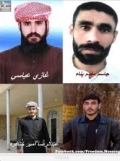
Herr GHAZI ABBASI, drohende Hinrichtung
Herr ABDUL-REZA AMIR-KHANAFEREH
Herr ABDUL-AMIR MOJADDAMI
Herr JASIM MOGHADDAM PAYAM, ebenfalls im Todestrakt
Amnesty International befürchtet, dass Ghazi Abbasi, ein Angehöriger der arabischen Minderheit der Ahwazi im Iran unmittelbar hingerichtet werden soll, da er in Einzelhaft verlegt worden ist. Er soll während der Haft gefoltert oder in anderer Weise misshandelt worden sein.
Am 27. September 2013 wurde der zum Tode verurteilte Ahwazi-Araber, Ghazi Abbasi, von seiner Zelle in eine Einzelzelle im Karoun-Gefängnis in Khuzestan verlegt. Ihm droht daher unmittelbar die Hinrichtung, da TodeskandidatInnen im Iran normalerweise kurz vor der Hinrichtung in Einzelhaft gebracht werden.
Ghazi Abbasi wurde zusammen mit drei weiteren Männern, Abdul-Reza Amir-Khanafereh, Abdul-Amir Mojaddami, und Jasim Moghaddam Payam, am 15. August 2012 von Abteilung 1 des Revolutionsgerichts in Ahwaz aufgrund der vage formulierten Anklagen "Feindschaft zu Gott" (moharebeh) und "Verdorbenheit auf Erden" (ifsad fil-arz) zum Tode verurteilt. Die Anklagen bezogen sich auf eine Reihe von Schusswechseln, die angeblich zum Tod eines Polizisten und eines Soldaten führten. Am 13. Februar 2013 hielt Abteilung 32 des Obersten Gerichtshofs die vier Todesurteile aufrecht. Die vier Männer können daher jederzeit hingerichtet werden.
Nach Aussagen der vier Männer waren sie an keinem der Schusswechsel beteiligt. Sie geben an, dass ihre "Geständnisse" durch Folter und andere Misshandlungen erzwungen wurden. Sie sollen die "Geständnisse" vor Gericht widerrufen haben. Ihre Foltervorwürfe sind bislang weder von dem Revolutionsgericht in Ahwaz noch vom Obersten Gerichtshof untersucht worden.
HINTERGRUNDINFORMATIONEN
Die vier Todeskandidaten wurden zusammen mit drei anderen Männern 2009 etwa zur gleichen Zeit festgenommen. Sie wurden monatelang ohne Zugang zu Rechtsbeiständen oder ihren Familien in einer Hafteinrichtung des Geheimdienstministeriums in Ahwaz in Einzelhaft gehalten.
Das Verfahren vor dem Revolutionsgericht fand hinter verschlossenen Türen statt und dauerte nicht einmal zwei Stunden. Das Gericht kam zu dem Schluss, dass die Angeklagten eine "separatistische ethnische" Gruppe eingerichtet hatten, die "Waffen einsetzte und Schusswechsel provozierte, um Angst und Panik zu verbreiten und die öffentliche Sicherheit zu stören". Das Urteil gründete sich hauptsächlich auf die "Geständnisse" der Angeklagten, die sie während des Gerichtsverfahrens mit der Begründung widerriefen, sie seien unter Folter zustande gekommen.
Die anderen drei Männer, Shahab Abbasi, Sami Jadmavinejad und Hadi Albokhanafarnejad, wurden wegen begrenzter Beteiligung an den Schusswechseln zu drei Jahren Haft im inneriranischen Exil im Gefängnis in Ardebil im Nordwesten des Landes verurteilt.
Sowohl das niederinstanzliche Gericht als auch der Oberste Gerichtshofs haben in ihren Urteilen aufgeführt, dass einige der Angeklagten ihre "Geständnisse" vor Gericht mit der Begründung widerrufen haben, sie seien unter Folter und anderen Misshandlungen erpresst worden. Doch keines der Gerichte hat daraufhin eine Untersuchung der Foltervorwürfe veranlasst.
Artikel 38 der iranischen Verfassung und Artikel 9 des Gesetzes über die Wahrung rechtmäßiger Freiheiten und den Schutz von Bürgerrechten verbieten jegliche Formen der Folter zur Erlangung von Geständnissen. Das iranische Strafgesetzbuch schreibt sogar die strafrechtliche Verfolgung von BeamtInnen vor, die zur Erzwingung von Geständnissen Folter einsetzen. Trotz all dieser verfassungsrechtlichen Sicherheiten bezüglich der Unzulässigkeit von Zeugenaussagen, Aussagen unter Eid und Geständnissen unter Zwang, akzeptieren die iranischen Gerichte solche "Geständnisse" im Allgemeinen als Beweise und strahlen sie manchmal noch vor Prozessende im Fernsehen aus.
Amnesty International wendet sich ausnahmslos gegen die Anwendung der Todesstrafe, da sie eine Verletzung des Rechts auf Leben darstellt und die extremste Form einer grausamen, unmenschlichen und erniedrigenden Bestrafung ist. Die Organisation vertritt diese Ansicht ungeachtet der Schuldfrage, der Art des Verbrechens, der Hinrichtungsmethode oder spezifischer Eigenschaften der zum Tode verurteilten Person.
The Ahwazi Arab minority is one of many ethnic minorities in Iran. Much of Iran's Arab community lives in the south-western province of Khuzestan. Most are Shi'a Muslims but some are reported to have converted to Sunni Islam, heightening suspicions by the Shi'a-led government about Ahwazi Arabs. Minority members often report that they are marginalized and subject to discrimination in access to education, employment, adequate housing, political participation and cultural rights.
In his March 2013 report, Dr. Ahmed Shaheed, the United Nations Special Rapporteur on the situation of human rights in Iran, expressed concerns about the arrest, detention, and prosecutions for peaceful activities of members of the Ahwazi Arab community that called for social, economic, cultural, linguistic and environmental rights. He further raised concerns about the frequent reports of lack of due process and the use of incommunicado detention as well as torture and other ill-treatment
English:
The death penalty is used extensively in Iran. Officially, so far 281 executions have been acknowledged by Iranian authorities for 2013 but reliable sources have reported at least 200 additional executions during the year. Despite the release of a number of political prisoners ahead of Iran's new President Hassan Rouhani's speech at the United Nations General Assembly there have been no indications that his election in June 2013 has led to changes in Iran's reliance on the death penalty
Amnesty International
The annual third quarter report of 2013 for the arbitrary arrests in Al -Ahwaz
تشرين1/أكتوير 19, 2013The Al Ahwazi organization for human rights published its annual third quarter report of 2013(July-September 2013) for the arbitrary arrests in Al Ahwaz.
The Iranian intelligence forces during the period have ordered widespread arbitrary attacks and the arrests of tens of Al Ahwaz citizens and subsequently the arrest of citizens who was able to escape the primary arrest by the intelligence officials.
The sources have also confirmed the transfer of the detainees to the unknown locations for the interrogations by the Iranian Intelligence Service Authority.
The International human rights laws totally condemn the arbitrary arrest and forced confession of the detainees during interrogation by serious mental and health torture. The arbitrary attacks and arrests by the government officials are being implemented with no prior warning or official court charges court by the Iranian judiciary.
The fate of the hundreds of detainees remains to be unknown despite the serious attempts of their whereabouts or status by the relatives.
The Al Ahwazi organization for human rights totally condemns the arbitrary arrest of its citizens by the Iranian authorities. The arrests have affected the lives of hundreds of AlAhwazi citizens including many non-adult citizens.
|
Date of Arrest: |
Arrested by : |
Residence of : |
Age and Status |
Name |
Row |
|
01.07.2013 |
Arrested by the Iranian intelligence service for the charges of being a Sunni Muslim |
AlZarghan |
Bagher Gholami ben Eshagh |
1 |
|
|
01.07.2013 |
Arrested by the Iranian intelligence service for the charges of being a Sunni Muslim |
AlZarghan |
Tofigh Mazreah |
2 |
|
|
01.07.2013 |
Arrested by the Iranian intelligence service for the charges of being a Sunni Muslim |
AlZarghan |
Naeim Zarghani |
3 |
|
|
09.07.2013 |
Arrested by the Iranian intelligence service at the city of Mashhad |
AL Ahwaz |
Cultural activist and poet |
Saeid Amoori Ben Beshareh |
4 |
|
11.07.2013 |
Arrested by the Iranian intelligence service |
Veis |
35 years of age and married |
Abdolseied Tamimi |
5 |
|
13.07.2013 |
Arrested by the Iranian intelligence service for the charges of being a Sunni Muslim |
35 years of age, married and religious preacher |
Hasan Naseri Ben Beshareh |
6 |
|
|
26.07.2013 |
Arrested by the Iranian intelligence service |
Alhamidieh |
20 years of age and single |
Yousef Manbouhi Ben Zoviar |
7 |
|
26.07.2013 |
Arrested by the Iranian intelligence service |
Alhamidieh |
22 years of age |
Mostafa Halafi Ben Adnan |
8 |
|
04.08.2013 |
Arrested by the Iranian intelligence service during a raid on his house |
Almalashieh |
23 years of age |
Sadegh Heidari |
9 |
|
04.08.2013 |
Arrested by the Iranian intelligence service during a raid on his house |
Almalashieh |
22 years of age |
Mehdi Zohairi |
10 |
|
07.08.2013 |
Arrested by the Iranian intelligence service during a raid on his house |
Almalashieh |
25 years of age |
Housein Hamdi Ben Jasem |
11 |
|
07.08.2013 |
Arrested by the Iranian intelligence service |
Almalashieh |
27 years of age |
Ebrahim Dehimi |
12 |
|
07.08.2013 |
Arrested by the Iranian intelligence service during a raid on his house |
Heiolshohada |
Habib Ben Odeh |
13 |
|
|
07.08.2013 |
Arrested by the Iranian intelligence service during a raid on his house |
Heiolshohada |
Sadegh Ben Hamdan |
14 |
|
|
07.08.2013 |
Arrested by the Iranian intelligence service during a raid on his house |
Heiolshohada |
Mohamad Afravi |
15 |
|
|
07.08.2013 |
Arrested by the Iranian intelligence service during a raid on his house |
Heiolshohada |
Aref Ben Almajid |
16 |
|
|
07.08.2013 |
Arrested by the Iranian intelligence service during a raid on his house |
Alhamidieh |
22 years of age |
Salah Abiavi |
17 |
|
07.08.2013 |
Arrested by the Iranian intelligence service during a raid on his house |
Alhamidieh |
28 years of age |
Yousef Torofi Ben Majid |
18 |
|
07.08.2013 |
Arrested by the Iranian intelligence service during a raid on his house |
Alhamidieh |
27 years of age |
Ahmad Mormezi Ben Naser |
19 |
|
07.08.2013 |
Arrested by the Iranian intelligence service during a raid on his house |
Alhamidieh |
27 years of age |
Naji Saedi |
20 |
|
24.08.2013 |
Arrested by the Iranian intelligence service during a raid on his house |
Almohamareh |
17 years of age |
Mahmood Mazreah |
21 |
|
24.08.2013 |
Arrested by the Iranian intelligence service during a raid on his house |
Almohamareh |
31 years of age |
Yousef Hamoudavi Ben Nezar Yousef |
22 |
|
28.08.2013 |
Arrested by the Iranian intelligence service during a raid on his house |
Khalaf Mousa Village on the district of Shoosh city |
17 years of age |
Saeid Beit Abdollah (Alkaebi)Ben Younes |
23 |
|
28.08.2013 |
Arrested by the Iranian intelligence service during a raid on his house |
Khalaf Mousa Village on the district of Shoosh city |
married |
Hassan Shayani (Alkaebi)Ben Kahaf |
24 |
|
28.08.2013 |
Arrested by the Iranian intelligence service during a raid on his house |
Khalaf Mousa Village on the district of Shoosh city |
married |
Farhan Beit Abdollah(Alkaebi) |
25 |
|
28.08.2013 |
Arrested by the Iranian intelligence service |
Veis |
30 years of age with a master’s degree in Arab literature |
Davood Hamid |
26 |
|
28.08.2013 |
Arrested by the Iranian intelligence service |
Veis |
29 years of age and an employee of food distribution company |
Fazel Vahbi |
27 |
|
07.09.2013 |
Arrested by the Iranian intelligence service |
Koot Seied Enayeh on district of Sheiban |
Following the protest to the confiscation of their lands |
Adel Zoheiri -34 years of age (brother of Hadi Zoheiri) |
28 |
|
07.09.2013 |
Arrested by the Iranian intelligence service |
Koot Seied Enayeh on district of Sheiban |
Following the protest to the confiscation of their lands |
Hadi Zoheiri |
29 |
|
07.09.2013 |
Arrested by the Iranian intelligence service |
Koot Seied Enayeh on district of Sheiban |
Following the protest to the confiscation of their lands |
Adib Zoheiri |
30 |
|
07.09.2013 |
Arrested by the Iranian intelligence service |
Koot Seied Enayeh on district of Sheiban |
Following the protest to the confiscation of their lands |
Amin Ataei(Zoheiri) |
31 |
|
07.09.2013 |
Arrested by the Iranian intelligence service |
Koot Seied Enayeh on district of Sheiban |
Following the protest to the confiscation of their lands |
Ali Zoheiri |
32 |
|
07.09.2013 |
Arrested by the Iranian intelligence service |
Koot Seied Enayeh on district of Sheiban |
Following the protest to the confiscation of their lands |
Housein Zoheiri |
33 |
|
07.09.2013 |
Arrested by the Iranian intelligence service |
Koot Seied Enayeh on district of Sheiban |
Following the protest to the confiscation of their lands |
Amin Zoheiri-40 years of age (brother of Javad Zoheiri) |
34 |
|
07.09.2013 |
Arrested by the Iranian intelligence service |
Koot Seied Enayeh on district of Sheiban |
Following the protest to the confiscation of their lands |
Javad Zoheiri |
35 |
|
07.09.2013 |
Arrested by the Iranian intelligence service |
Koot Seied Enayeh on district of Sheiban |
Following the protest to the confiscation of their lands |
Sheikh Hamid Aljasem Zoheiri(father of Amin and Javad) |
36 |
|
07.09.2013 |
Arrested by the Iranian intelligence service |
Koot Seied Enayeh on district of Sheiban |
Following the protest to the confiscation of their lands |
Sheikh Jaefar Ben Haji Obeid |
37 |
|
07.09.2013 |
Arrested by the Iranian intelligence service |
Koot Seied Enayeh on district of Sheiban |
Following the protest to the confiscation of their lands |
Haji Saeied Ben Naser (son of Jasem Zoheiri) |
38 |
|
07.09.2013 |
Arrested by the Iranian intelligence service |
Koot Seied Enayeh on district of Sheiban |
Following the protest to the confiscation of their lands |
Haji Majid Ben Naser Ben Jasem Zoheiri |
39 |
|
07.09.2013 |
Arrested by the Iranian intelligence service |
Koot Seied Enayeh on district of Sheiban |
Following the protest to the confiscation of their lands |
Zohair Naser Ben Jasem Zoheiri |
40 |
|
11.09.2013 |
Arrested by the Iranian intelligence service during a raid on his house |
AL Ahwaz |
Cultural Activist |
Amin Zarghani |
41 |
|
11.09.2013 |
Arrested by the Iranian intelligence service during a raid on his house |
AL Ahwaz |
Cultural Activist |
Mahmood Bavi |
42 |
|
11.09.2013 |
Arrested by the Iranian intelligence service during a raid on his house |
AL Ahwaz |
Cultural Activist |
Mostafa Amoori |
48 |
|
11.09.2013 |
Arrested by the Iranian intelligence service during a raid on his house |
AL Ahwaz |
Cultural Activist |
Mohamad Desomi |
49 |
The AlAhwazi Organization for human rights (A.O.H.R.)
التقرير السنوي للربع الثالث من عام 2013 عن الاعتقالات العشوائية في الأحواز
تشرين1/أكتوير 18, 2013تنشر المنظمة الأحوازية لحقوق الإنسان تقريرها السنوي للربع الثالثلعام 2013 حول الاعتقالات التي تمت منذ شهر يوليو لغاية شهر سبتمبر لهذا العام.
و قد قامت القوات الامينة الايرانيةبرفقة عناصر من دائرة الاستخبارات في الاشهر الثلاثة الماشية بحمة مداهمات واسعة في مختلف المدن الأحوازية اعتقلت خلالها العشرات من المواطنين الأحوازيين بينما فر عدد اخر من المواطنين الذين تمت مطاردتهم من قبضة السلطات الايرانية.
و ذكرت مصادر المنظمة و مصادر أحوازية مؤثقة ان المعتقلين الأحوازيين العرب قد تم نقلهم الى الاماكن السرية و الخاصة بجهاز الامن الايراني في المدن التي تم القاء القبض عليهم للتحقيق معهم.
و بما ان القوانين الدولية الانسانية تنص على توجيه الاتهام للمعتقلين فور اعتقالهم فورأ و عدم تعذيبهم بهدف الاعتراف على امر ما او على شخص ثالث الا ان هذه الاعتقالات قد تمت بعد ماداهمت القوات الامنية و الاستخباراتية الايرانية بيوت المواطنين الأحوازيين دون اي انذار مسبق او ترخيص رسمي من قبل الجهات القانونية و دون ان توجه لهم اية تهمة قبل أو اثناء الاعتقالهم.
و بقى مصير هؤلاء المعتقلين و المئات من المعتقلين الأحوازيين الاخرين مجهولأ لغاية هذه اللحظة بالرغم من المحاولات العديدة التي بذلها ذويهم للقائهم.
و تدين المنظمة الأحوازية لحقوق الإنسان مثل هذه الاعتقالات العشوائية التي تشنها السلطات الايرانية في المدن الأحوازية و التي طالت المئات من المواطنين الأحوازيين بينهم من لاتتجاوز اعمارهم الثمانية عشر (18 ) عامأ.
قائمة المعتقلين الأحوازيين:
|
تأريخ الاعتقال |
الجهة التي اعتقلته |
عنوان السكن |
العمر_ المهنة |
الاسم و اللقب العائلي |
الترتيب |
|
01.07.2013 |
دائرة الاستخبارات برفقة الامن بتهمة التسنن |
الزرقان |
باقر غلامي بن اسحاق |
1 |
|
|
01.07.2013 |
دائرة الاستخبارات برفقة الامن بتهمة التسنن |
الزرقان |
توفيق مزرعة |
2 |
|
|
01.07.2013 |
دائرة الاستخبارات برفقة الامن بتهمة التسنن |
الزرقان |
نعيم زرقاني |
3 |
|
|
09.07.2013 |
جهاز الاستخباراتالايراني في مدينة مشهد |
الأحواز |
اديب و شاعر |
سعيد عموري بن بشارة |
4 |
|
11.07.2013 |
الاستخبارات برفقة الامن |
ويس |
35 عامأ و متزوج |
عبدالسيد تميمي |
5 |
|
13.07.2013 |
جهاز الاستخبارات الايراني بتهمة التسنن |
35 عامأ،داعية اسلامي و متزوج |
حسن ناصري بن علي |
6 |
|
|
26.07.2013 |
الامن برفقة الاستخبارات |
الحميدية |
20 عامأ و اعزب |
يوسف منبوهي بن زوير |
7 |
|
26.07.2013 |
الامن برفقة الاستخبارات |
الحميدية |
22 عامأ |
مصطفى حلفي بن عدنان |
8 |
|
04.08.2013 |
الاستخبارات برفقة الامن بعد مداهمة بيته |
الملاشية |
23 عامأ |
صادق حيدري |
9 |
|
04.08.2013 |
الاستخبارات برفقة الامن الايراني بعد مداهمة بيته |
الملاشية |
22 عامأ |
مهدي زهيري |
10 |
|
07.08.2013 |
الاستخبارات برفقة الامن الايراني بعد مداهمة بيته |
الملاشية |
25 عامأ |
حسين حمدي بن جاسم |
11 |
|
07.08.2013 |
الاستخبارات و الامن |
الملاشية |
27 عامأ |
ابراهيم دحيمي |
12 |
|
07.08.2013 |
الاستخبارات والامن الايراني بعد مادهمة بيته |
حي الشهداء |
حبيب بن عودة |
13 |
|
|
07.08.2013 |
الاستحبارات برفقة الامن الايراني بعد مداهمة بيته |
حي الشهداء |
صادق بن حمدان |
14 |
|
|
07.08.2013 |
الاستحبارات برفقة الامن الايراني بعد مداهمة بيته |
حي الشهداء |
محمد عفراوي |
15 |
|
|
07.08.2013 |
الاستحبارات برفقة الامن الايراني بعد مداهمة بيته |
حي الشهداء |
عارف بن عبدالمجيد |
16 |
|
|
07.08.2013 |
الاستحبارات برفقة الامن الايراني بعد مداهمة بيته |
الحميدية |
22 عامأ |
صلاح عبياوي |
17 |
|
07.08.2013 |
الاستحبارات برفقة الامن الايراني بعد مداهمة بيته |
مدينة الحميدية حي المستضعفين |
28 عامأ |
يوسف طرفي بن مجيد |
18 |
|
07.08.2013 |
الاستحبارات برفقة الامن الايراني بعد مداهمة بيته |
مدينة الحميدية حي العمال |
27 عامأ |
احمد مرمضي بن ناصر |
19 |
|
07.08.2013 |
الاستحبارات برفقة الامن الايراني بعد مداهمة بيته |
مدينة الحميدية حي العمال |
27 عامأ |
ناجي ساعدي |
20 |
|
24.08.2013 |
جهاز الاستخبارات الاستحبارات برفقة الامن الايراني بعد مداهمة بيته |
مدينة المحمرة |
17 عامأ |
محمود مزرعة |
21 |
|
24.08.2013 |
الاستحبارات برفقة الامن الايراني بعد مداهمة بيته |
مدينة المحمرة حي السرحانية |
31 عامأ |
يوسف حموداوي بن نزار يوسف |
22 |
|
28.08.2013 |
الاستحبارات برفقة الامن الايراني بعد مداهمة بيته |
قرية خلف المسلم تابعة لمدينة السوس |
17عامأ |
سعيد بيت عبدالله (الكعبي)بن يونس |
28 |
|
28.08.2013 |
الاستحبارات برفقة الامن الايراني بعد مداهمة بيته |
قرية خلف المسلم تابعة لمدينة السوس |
متزوج |
حسن شاياني (الكعبي)ين كهف |
29 |
|
28.08.2013 |
الاستحبارات برفقة الامن الايراني بعد مداهمة بيته |
قرية خلف المسلم تابعة لمدينة السوس |
متزوج |
فرحان بيت عبدالله(الكعبي) |
30 |
|
28.08.2013 |
جهاز الاستخبارات الايراني |
ويس |
30 عاما، ماجيستير ادب العربي |
داود حميد |
31 |
|
28.08.2013 |
جهاز الاستخبارات الايراني |
ويس |
29 عاما، موظف في شركة لتوزيع المواد الغذائية |
فاضل وهبي |
32 |
|
07.09.2013 |
جهاز الاستخبارات الايراني |
كوت سيد عناية تابع لمدينة شيبان |
اثر اشتباكات لمصادرة اراضيهم |
عادل زهيري(شقيق هادي زهيري (34) |
33 |
|
07.09.2013 |
الامن برفقة الاستخبارات |
كوت سيد عناية تابع لمدينة شيبان |
اثر اشتباكات لمصادرة اراضيهم |
هادي زهيري |
34 |
|
07.09.2013 |
الاستخبارات برفقة الامن |
كوت سيد عناية تابع لمدينة شيبان |
اثر اشتباكات لمصادرة اراضيهم |
أديب زهيري |
35 |
|
07.09.2013 |
الاستخبارات برفقة الامن |
كوت سيد عناية تابع لمدينة شيبان |
اثر اشتباكات لمصادرة اراضيهم |
امين عطائي (زهيري) |
36 |
|
07.09.2013 |
الاستخبارات برفقة الامن |
كوت سيد عناية تابع لمدينة شيبان |
اثر اشتباكات لمصادرة اراضيهم |
علي زهيري |
37 |
|
07.09.2013 |
الاستخبارات برفقة الامن |
كوت سيد عناية تابع لمدينة شيبان |
اثر اشتباكات لمصادرة اراضيهم |
حسين زهيري |
38 |
|
07.09.2013 |
الاستخبارات برفقة الامن |
كوت سيد عناية تابع لمدينة شيبان |
اثر اشتباكات لمصادرة اراضيهم |
امين زهيري شقيق جواد زهيري (40) |
39 |
|
07.09.2013 |
الاستخبارات برفقة الامن |
كوت سيد عناية تابع لمدينة شيبان |
اثر اشتباكات لمصادرة اراضيهم |
جواد زهيري |
40 |
|
07.09.2013 |
الاستخبارات برفقة الامن |
كوت سيد عناية تابع لمدينة شيبان |
اثر اشتباكات لمصادرة اراضيهم |
الشيخ حميد الجاسم زهيري والد امين و جواد |
41 |
|
07.09.2013 |
الاستخبارات برفقة الامن |
كوت سيد عناية تابع لمدينة شيبان |
اثر اشتباكات لمصادرة اراضيهم |
الشيخ جعفر بن حجي عبيد |
42 |
|
07.09.2013 |
الاستخبارات برفقة الامن |
كوت سيد عناية تابع لمدينة شيبان |
اثر اشتباكات لمصادرة اراضيهم |
حجي سعيد بن ناصر بن جاسم الزهيري |
43 |
|
07.09.2013 |
الاستخبارات برفقة الامن |
كوت سيد عناية تابع لمدينة شيبان |
اثر اشتباكات لمصادرة اراضيهم |
حجي مجيد بن ناصر بن جاسم الزهيري |
44 |
|
07.09.2013 |
الاستخبارات برفقة الامن |
كوت سيد عناية تابع لمدينة شيبان |
اثر اشتباكات لمصادرة اراضيهم |
زهير ناصر بن جاسم الزهيري |
45 |
|
11.09.2013 |
قوات الامن الايرانية برفقة الاستخبارات بعد مداهمة البيت |
الأحواز |
ناشط في المجال الثقافي |
امين زرقاني |
46 |
|
11.09.2013 |
قوات الامن الايرانية برفقة الاستخبارات بعد مداهمة البيت |
الأحواز |
ناشط في المجال الثقافي |
محمود باوي |
47 |
|
11.09.2013 |
قوات الامن الايرانية برفقة الاستخبارات بعد مداهمة البيت |
الأحواز |
ناشط في المجال الثقافي |
مصطفى عموري |
48 |
|
11.09.2013 |
قوات الامن الايرانية برفقة الاستخبارات بعد مداهمة البيت |
الأحواز |
ناشط في المجال الثقافي |
محمد دسومي |
49 |
The execution of AlAhwazi citizen Jomea Alwani at Karoon prison
تشرين1/أكتوير 10, 2013The AlAhwazi organization for human rights was informed that the Iranian government has carried out the execution of an AlAhwazi citizen named Jomea Alwani at Karoon prison of AlAhwaz.
He was arrested about six months ago and has been sentenced for an execution on Sunday October 2013.
The executed was 58 years old, married with children and grandchildren and was living in the village of Sous district of AlAhwaz and recently about a year ago had moved to the city of AlAhwaz.
The AlAhwazi organization for human rights has not confirmed the charges of conviction by the Iranian government against Jomea Alwani .
The AlAhwazi organization for human rights condemns the death penalty offense by the government of Iran, and requests the international humanitarian organizations (governmental and non-governmental) and most importantly the UN Human Rights organization to pressure the Iranian government to end the implementation of the death penalty sentences against the prisoners.
AlAhwazi organization for human rights (A.O.R.H.)
اعدام یک شهروند احوازی در زندان کارون
تشرين1/أكتوير 08, 2013مقاملت ایرانی روز 03.09.2013 يك هموطن عرب أحوازي بنام سمیر .ح را در زندان کارون احواز اعدام کرد.
مقامات ایرانی گفته بودند که این زندانی را یکسال پیش در یکی از روستاهای شهر عبادان به تهمت قتل دستگیر کرده اند
سازمان أحوازي حقوق بشر صحت يا عدم صحت این اتهام را تائید نمیکند.
مقامات ايراني قبل از اين نيز صدها تن از هموطنان عرب أحوازي را كه در زندان بوده اند را اعدام و ادعا كرده اند كه انها
قاتل و يا تجار مخدرات هستند كه بعدأ ثابت شده كه معدوم شدگان از فعالان سياسي و فرهنگي بوده اند.
اين سازمان با محكوم كردن اين اعدامها از تمامي سازمانهاي حقوق بشر بين المللي درخواست مي نمايد كه با فشار اوردن بر حكومت ايران مانع از اجراي حكم اعدام شوند.
سازمان أحوازي حقوق بشر

دستگیری سه شهروند أحوازی از روستای کعب خلف مسلم از توابع شهر سوس
تشرين1/أكتوير 08, 2013بنابه گزارش منابع حبري سازمان حقوق بشر أحوازي؛نيروهاي امنيتي ايران روز چهار شنبه 28 اگوست با هجوم به روستاي كعب خلف المسلم از توابع شهر سوس سه تن از هموطنان عرب أحوازي را دستگیر و به جاي نامعلومي منتقل كرده اند.
اين نيروها بدون در دست داشتن هيچگونه مجوز قانوني و يا حكم قانوني از دستگاهاي زيربط به سه خانه در اين روستا هجوم اورده كه نتيجه ان دستگيري :
1_ فرحان بیت عبدلله (الکعبی ) فرزند رضا متاهل و دارای فرزند
2_ سعید بیت عبدلله (الکعبی ) فرزند یونس 17 ساله
3_ جانی چایان (الکعبی ) فرزند کهف متاهل ودارای فرزند
منابع خبري سازمان مي گويند كه نيروهاي وزارت اطلاعات اين سه نفر را به مركز اين وزارت در شهر سوس و يا قنيطره برده اند.
سازمان أحوازي حقوق بشر يا محكوم كردن اينگونه دستگيرها كه دربين انها افراد زير 18 نيز مى باشد را محكوم كرده خواهان ازادى هرچه سؤيعتر انها مى باشد.
سازمان أحوازي حقوق بشر
إعدام يك شهروند أحوازی در شهر تمیمیه
تشرين1/أكتوير 08, 2013مقامات ایرانی در روز چهارشنبه 21.08.2013 در شهر تمیمیه متهم سعید.ع را به تهمت مواد مخدر در ملاءعام اعدام کرد.
به گفته يك منبع اگاه اين اعدام در ملاء عام و در يكي از خيابانهاي شهر تميميه أحواز به اجرا دراورده شد.
سازمان أحوازي حقوق بشر با محكوم كردن اینگونه اعدام ها درخواست محاکمه های علنی ، شفاف و واضح را برای زندانیان أحوازی نموده و منع زندانيان از تعيين و انتخاب يك وكيل مدافع جهت دفاع از خود را نقض صريحي در قوانين بين المللي حقوق بشر مي داند.
سازمان أحوازي حقوق بشر